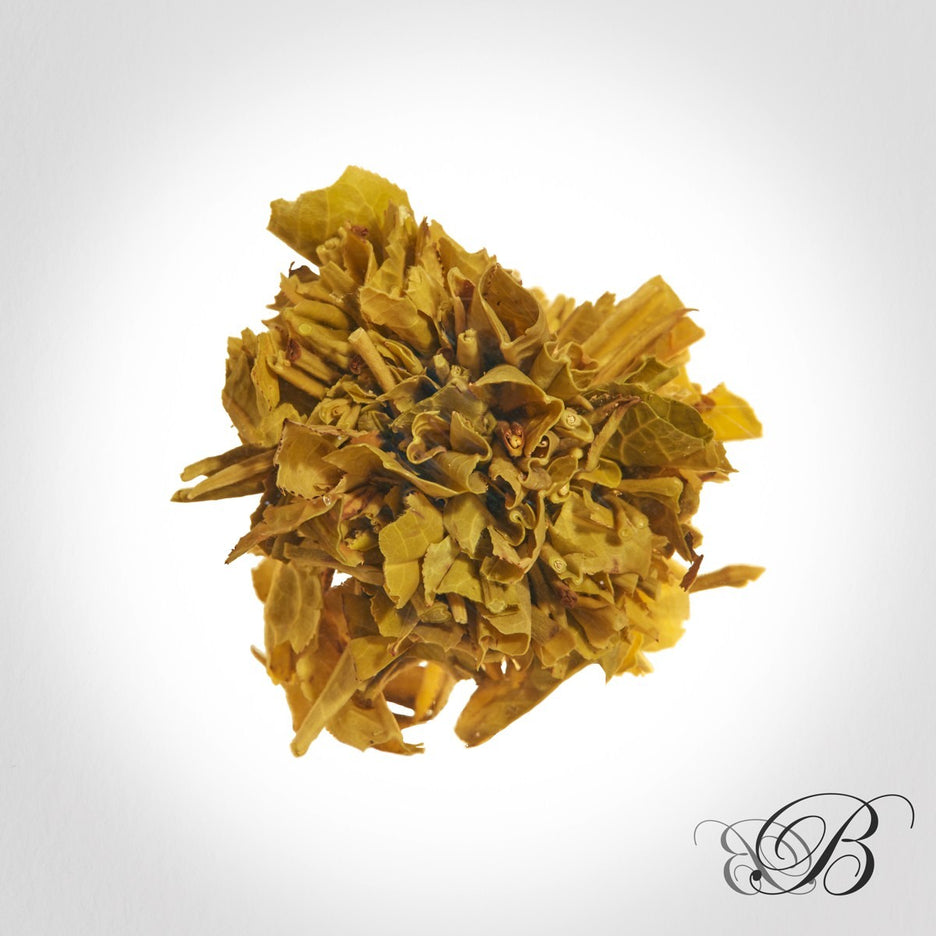
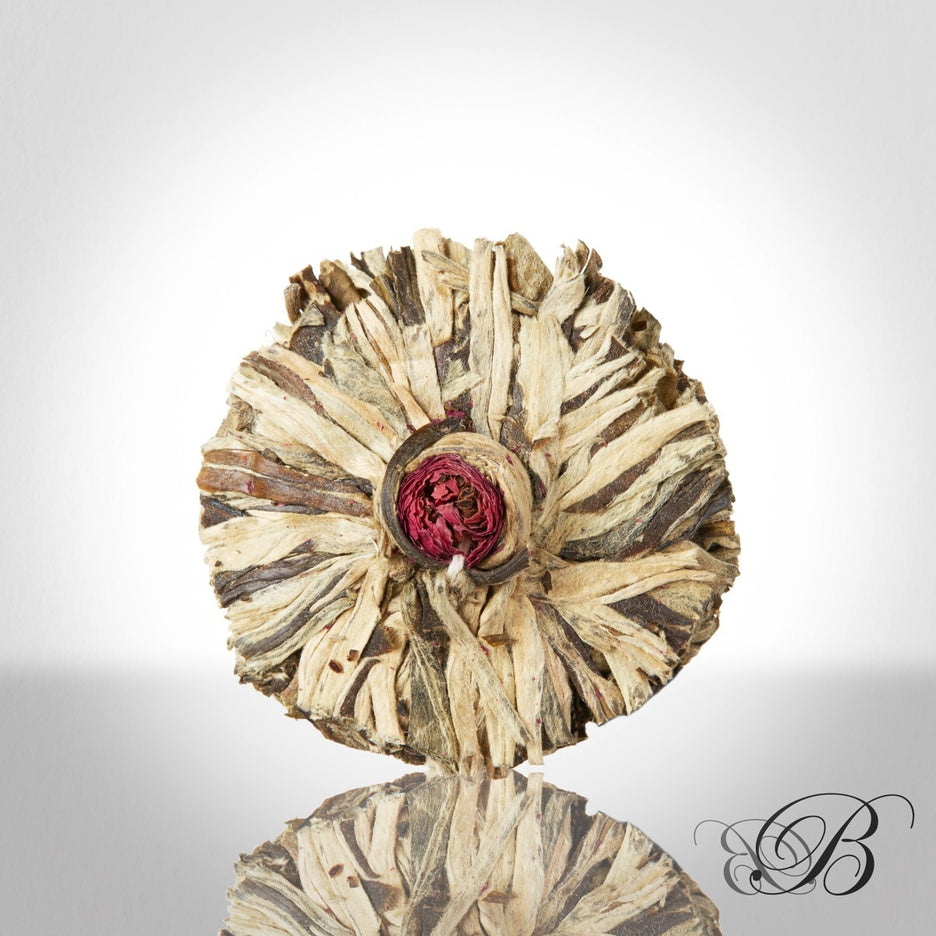
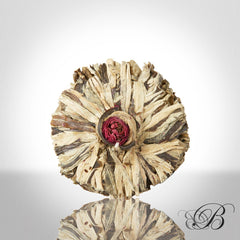
Tea flowers pebble-shaped

Flower tea to infuse

Regular price 25,70 €
Sale price 25,70 € Regular price 25,70 €
Unit price  per 
Tax included. Shipping calculated at checkout.
bulk packaging
Fleurs de thé forme galet - Thé classique

Tea flowers pebble-shaped

100% secure payment

3 free samples with each order

Fast and free delivery for purchases over €65

Infusion time:
Infusion time: 5-6 min (wait for the flower to fully open)
Water temperature:
Water temperature: 80°C

- Tea flowers to brew -


Leaves and flowers are assembled manually to create little bouquets that will bloom beneath your eyes. Our tea flowers are created from Huang Shan Mao Fend tea.

Around 12 tea flowers for 100g

  • Lightly scented, while retaining the green notes of tea

Food and tea pairing
This delicate flowering tea calls for light, airy dishes, all transparency and freshness. It gracefully complements an exotic fruit salad of lychee, mango, and dragon fruit, delicately drizzled with a light lemongrass syrup. The tea, served alongside, cleanses the palate of the fruit's natural sweetness and brings a welcome sense of clarity. Its floral notes echo the aroma of the lychee, while the lemongrass underscores the vegetal freshness of the Mao Feng tea.

Pebble-shaped tea flower cocktail
For a spectacular summer version, bloom your tea flower in a large carafe of room-temperature water and let it infuse slowly in the refrigerator for 4 to 6 hours. Cold brewing will extract the sweetness of the green tea without any bitterness, preserving pure, crystalline vegetal notes. Serve in ice-filled glasses, adding a slice of cucumber and a few goji berries for color. It's a refreshing, visually stunning tea water that will take pride of place at the center of a summer table.

- Tea flowers to brew -


Leaves and flowers are assembled manually to create little bouquets that will bloom beneath your eyes. Our tea flowers are created from Huang Shan Mao Fend tea.

Around 12 tea flowers for 100g

  • Lightly scented, while retaining the green notes of tea

The pebble-shaped tea flower is undoubtedly the most discreet of all tea flowers. Where other arrangements announce their intention with an expressive shape or a visible center, the pebble opts for restraint. Compact, self-contained, almost mineral, it reveals nothing of its contents. This apparent simplicity is not a stylistic choice: it reflects a profoundly Chinese aesthetic, where the value of an object is measured as much by what it suggests as by what it shows.

In Chinese tea culture, the round shape is associated with balance, continuity, and stability. The pebble evokes a stone polished by water, shaped slowly by time rather than force. This image resonates particularly strongly in the art of tea, where patience, repetition, and attention to detail take precedence over immediate effect. The pebble-shaped tea flower embodies this philosophy: it does not seek to impress, but to accompany.
Unlike more showy flowering teas, the pebble tea isn't designed for a quick revelation. Its opening is intentionally gradual, sometimes almost imperceptible at first. As it steeps, the leaves slowly unfurl, allowing the central flower to emerge as a natural consequence of time, not as an anticipated climax. This extended timeframe is an integral part of the experience. The pebble tea teaches a kind of openness: one must accept waiting, observing, without trying to rush the process.

This delicate architecture demands a precise choice of raw materials. Tea flowers are made almost exclusively from green teas. With minimal oxidation, the leaf retains a suppleness and strength essential for the art of tea making. It can be folded, pressed, and then unfurl during infusion without breaking. Green tea also yields a clear and luminous liquor, crucial for observing the blossoming process. Its gentle, vegetal character acts as a setting, allowing the flower to express itself without disrupting the balance of the cup.

In Chinese teahouses, this compact and refined form is often associated with hospitality. It is served when one wishes to create a calm atmosphere, conducive to conversation, without ostentation. Offering a tea flower in this way is to offer shared time rather than an explicit symbolic message. Where the heart speaks of emotion and the double flower of generosity, it evokes above all presence. It accompanies those moments when one receives an important guest, when one begins a conversation, when one pauses in the rhythm of the day.

This shape is often considered by artisans to be one of the most demanding. Its balance relies on perfectly controlled tension: too tight, and the opening is poor; too loose, and the structure loses its shape. Nothing should protrude, nothing should betray the presence of the inner flower before infusion. It requires mastery of technique and an intimate knowledge of the leaf.

The pebble-shaped flower tea is therefore not spectacular. It doesn't tell an immediate story, but rather offers a slow, deliberate interpretation. It invites a peaceful relationship with tea, where pleasure arises from patient observation and consistency rather than surprise. In a world where everything is revealed instantly, it reminds us that some beauties require time, and that it is precisely this time that gives them their value.

The Betjeman & Barton soul supplement

A botanical poem that unfolds before your eyes, transforming the tea moment into a silent and magical ballet.