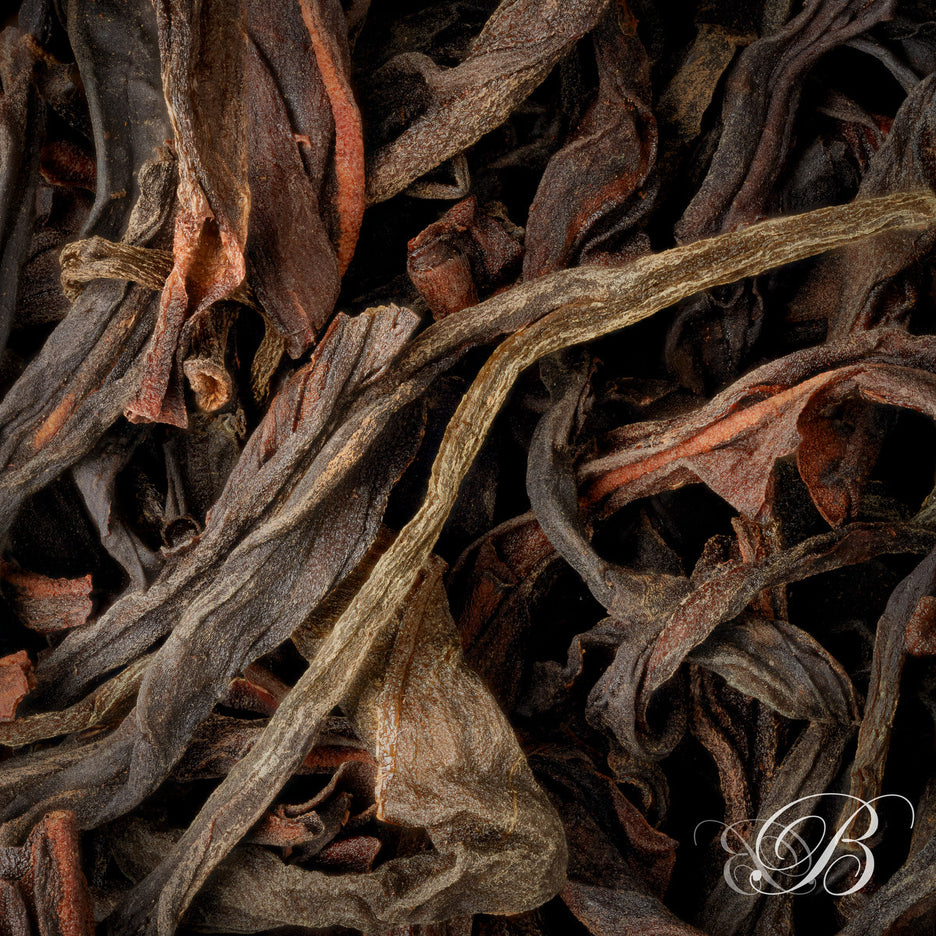
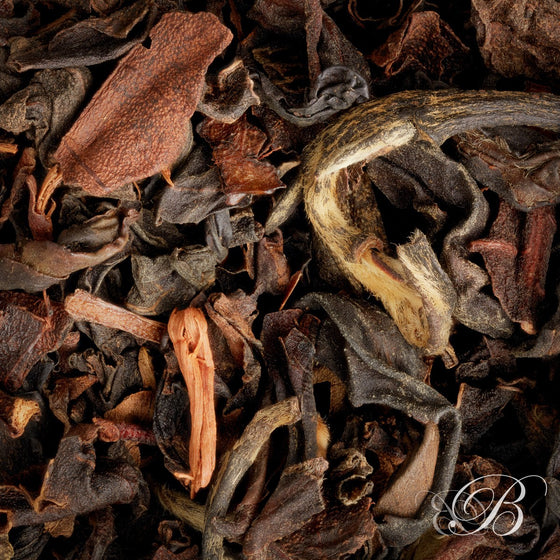
Chine Wulong Dancong Phoenix Lan Hua Xiang

China tea, notes of honey and orchid - Grand Cru

Regular price 89,25 €
Sale price 89,25 € Regular price 89,25 €
Unit price  per 
Tax included. Shipping calculated at checkout.
bulk packaging
Thé chinois Wulong Dancong Phoenix Lan Hua Xiang - Thés

Chine Wulong Dancong Phoenix Lan Hua Xiang

100% secure payment

3 free samples with each order

Fast and free delivery for purchases over €65

Tasting moment:
Tasting moment: Tout au long de la journée
Infusion time:
Infusion time: 4 min
Water temperature:
Water temperature: 90°C

- Chinese Wulong - Grand Cru -

This blue-green tea is an exceptional tea. It was harvested in April 2022 on a base of Cultivar Lan Hua Xiang, located in the Phoenix Mountains (altitude 1,500m) northwest of the city of Guangdong. There are about 3,700 tea trees over 200 years old in this region, which grow completely wild. The particularity of these trees lies in the fact that their maturity is only reached after 60 years. The "push" method, specific to the Phoenix, is very unique. Indeed, the tea plants are cut and grafted in order to preserve and preserve the very specific flavors of this ROYAL tea. Its production dates back to the times of the Ming and Qing Dynasties, and its name means Honey and Orchid...

Of all the tea families, oolongs remain the most difficult to define. Born from semi-oxidation, they occupy that intermediate space where the leaf is neither truly green nor completely black. The great oolongs of Fujian, such as the Tie Guan Yin from Anxi, are often cited as the cradle of this family. The Dancong teas from the Phoenix Mountains, however, follow a different path, more vertical, more mineral, shaped by a very different terroir.

This region, located in eastern Guangdong, is unlike the rolling hills of Fujian. Here, villages nestle in the hollows of steeper slopes, the mists rise more quickly, and ancient tea trees sometimes grow on the edge of the forest, seemingly left to their own devices. These trees, some over a century old, have acquired over time a unique ability to absorb the mountain. They produce teas with distinct aromas: ripe fruit, pale honey, blue flowers, and a high-altitude tension characteristic of Dancong.

It is within this context that Lan Hua Xiang, the "Orchid Fragrance," one of the most sought-after cultivars, was born. The founding principle of Dancong, "one tea, one tree," reminds us that each fragrance originates from a specific lineage of mother trees selected for their unique scent. To preserve its expression, producers graft young tea plants onto these aromatic rootstocks, guaranteeing the continuity of the orchid profile. Nothing is added: this signature is inscribed in the tea plant's genetics and nourished by the red soil of Phoenix, faithfully passed down from generation to generation.

The harvest, which begins in early April, follows a simple logic: picking when the leaf is at its peak. As soon as the light rises and the dew disappears, the pickers take a bud and two leaves, neither younger nor more mature, so that they reveal their aromatic potential without being overly green.

After harvesting, Lan Hua Xiang enters its true development phase. Its oxidation, around 30 to 40%, results from alternating withering and shaking by hand on large bamboo trays. These actions, repeated at precise intervals, slightly bruise the edges of the leaf and control the progression of oxidation. The tea masters of Fenghuang, often from families established for generations in villages like Wudong, adjust each step by eye and nose: humidity, ventilation, and the resting time between handling. No machine can replace this subtle understanding of the material.

Production remains artisanal. Dancong teas come almost exclusively from small family gardens around Fenghuang Zhen. Each family cultivates only a few plots, often with heirloom tea plants. The quantity produced is modest, rarely more than a few dozen kilos per garden per year. Hand-rolling followed by final roasting in small drums heated by charcoal or electricity stabilizes the leaves and fixes the floral fragrance of the cultivar. The result is an amber-colored, dense, precise oolong tea that perfectly reflects its terroir and the expertise of those who crafted it.

Food and tea pairing
A chocolate mousse made with a deep and floral single-origin Nacional tea from Ecuador creates an ideal dialogue with Dancong Phoenix Lan Hua Xiang. Served in a glass, this dessert is enjoyed with a brunoise of lychee sprinkled with caramelized sesame seeds. The juicy freshness of the fruit and the richness of the chocolate highlight the tea's orchid notes, while the lightly honeyed infusion lends the dessert an airy and crystalline quality.

Dancong Phoenix Lan Hua Xiang wulong tea recipe
A few crystallized Dancong leaves, shaped into petals, become a delicate and crunchy condiment, perfect for enhancing a fruit compote. Coated in a thin layer of sugar and then dried, they release a distinct floral note upon tasting, reminiscent of an orchid blossom. Sprinkled sparingly over a white peach or lychee compote, they introduce a splendid contrast: the melting texture of the fruit meets the fragrant fragrantness of the tea, creating a luminous, refined, and subtly captivating bite.

10338

- Chinese Wulong - Grand Cru -

This blue-green tea is an exceptional tea. It was harvested in April 2022 on a base of Cultivar Lan Hua Xiang, located in the Phoenix Mountains (altitude 1,500m) northwest of the city of Guangdong. There are about 3,700 tea trees over 200 years old in this region, which grow completely wild. The particularity of these trees lies in the fact that their maturity is only reached after 60 years. The "push" method, specific to the Phoenix, is very unique. Indeed, the tea plants are cut and grafted in order to preserve and preserve the very specific flavors of this ROYAL tea. Its production dates back to the times of the Ming and Qing Dynasties, and its name means Honey and Orchid...

Of all the tea families, oolongs remain the most difficult to define. Born from semi-oxidation, they occupy that intermediate space where the leaf is neither truly green nor completely black. The great oolongs of Fujian, such as the Tie Guan Yin from Anxi, are often cited as the cradle of this family. The Dancong teas from the Phoenix Mountains, however, follow a different path, more vertical, more mineral, shaped by a very different terroir.

This region, located in eastern Guangdong, is unlike the rolling hills of Fujian. Here, villages nestle in the hollows of steeper slopes, the mists rise more quickly, and ancient tea trees sometimes grow on the edge of the forest, seemingly left to their own devices. These trees, some over a century old, have acquired over time a unique ability to absorb the mountain. They produce teas with distinct aromas: ripe fruit, pale honey, blue flowers, and a high-altitude tension characteristic of Dancong.

It is within this context that Lan Hua Xiang, the "Orchid Fragrance," one of the most sought-after cultivars, was born. The founding principle of Dancong, "one tea, one tree," reminds us that each fragrance originates from a specific lineage of mother trees selected for their unique scent. To preserve its expression, producers graft young tea plants onto these aromatic rootstocks, guaranteeing the continuity of the orchid profile. Nothing is added: this signature is inscribed in the tea plant's genetics and nourished by the red soil of Phoenix, faithfully passed down from generation to generation.

The harvest, which begins in early April, follows a simple logic: picking when the leaf is at its peak. As soon as the light rises and the dew disappears, the pickers take a bud and two leaves, neither younger nor more mature, so that they reveal their aromatic potential without being overly green.

After harvesting, Lan Hua Xiang enters its true development phase. Its oxidation, around 30 to 40%, results from alternating withering and shaking by hand on large bamboo trays. These actions, repeated at precise intervals, slightly bruise the edges of the leaf and control the progression of oxidation. The tea masters of Fenghuang, often from families established for generations in villages like Wudong, adjust each step by eye and nose: humidity, ventilation, and the resting time between handling. No machine can replace this subtle understanding of the material.

Production remains artisanal. Dancong teas come almost exclusively from small family gardens around Fenghuang Zhen. Each family cultivates only a few plots, often with heirloom tea plants. The quantity produced is modest, rarely more than a few dozen kilos per garden per year. Hand-rolling followed by final roasting in small drums heated by charcoal or electricity stabilizes the leaves and fixes the floral fragrance of the cultivar. The result is an amber-colored, dense, precise oolong tea that perfectly reflects its terroir and the expertise of those who crafted it.

10338

The Betjeman & Barton soul supplement

An exceptional Wulong, Grand Cru des Phoenix, where rare orchid meets luminous minerality.