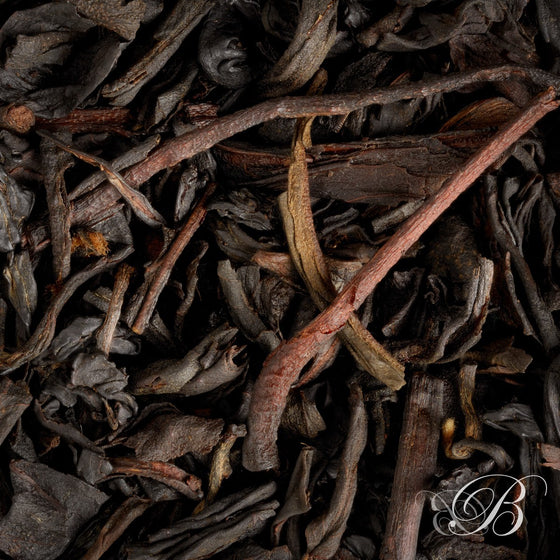
Formosa Lapsang Crocodile
Formosa tea with a subtly smoky taste

Formosa Lapsang Crocodile
100% secure payment
3 free samples with each order
Fast and free delivery for purchases over €65
- Formosa with a smoky taste -
This blue-green tea offers a very powerful cup, with a pronounced smoky flavour. Ideal for a traditional English breakfast.
Born in Taiwan, Formosa Lapsang Crocodile is the result of a fusion between the Chinese heritage of Lapsang Souchong and the island's oolong genius. Smoking techniques originating from Fujian have been reinterpreted using entirely Taiwanese methods, sourced from small family farms in the Nantou district. The leaves, processed like a mid-grade oolong, typically oxidized between 50 and 70%, offer the ideal structure for smoking without sacrificing their suppleness or depth. These workshops, often attached to modest oolong farms, perpetuate a hybrid expertise where Chinese precision meets local sensibility.
Unlike Chinese Lapsang Souchong, Taiwanese smoking doesn't rely exclusively on solid pine. Depending on the region and season, producers use Taiwanese cypress (hinoki), longan wood, or a subtle blend of local softwoods. Each imparts a unique character to the smoke, making it drier or rounder, bolder or more diffuse. This choice of wood, rarely standardized, reflects the experimental nature of Taiwanese workshops, where the toasting, humidity, and height of the smoking racks are adjusted according to the desired result.
The process itself differs: in China, smoking Lapsang Souchong is historically associated with a final direct fire-drying after complete oxidation. In Taiwan, smoking can occur at two stages, either during intermediate drying or at the very end of the process, to create a more precise smoke. Artisans often work in small batches, in tea houses where the rooms are still heated by manually controlled hearths, a task that requires long hours of observation. Some workshops have traditional lofts where the smoked leaves are left to rest and homogenize before shaping.
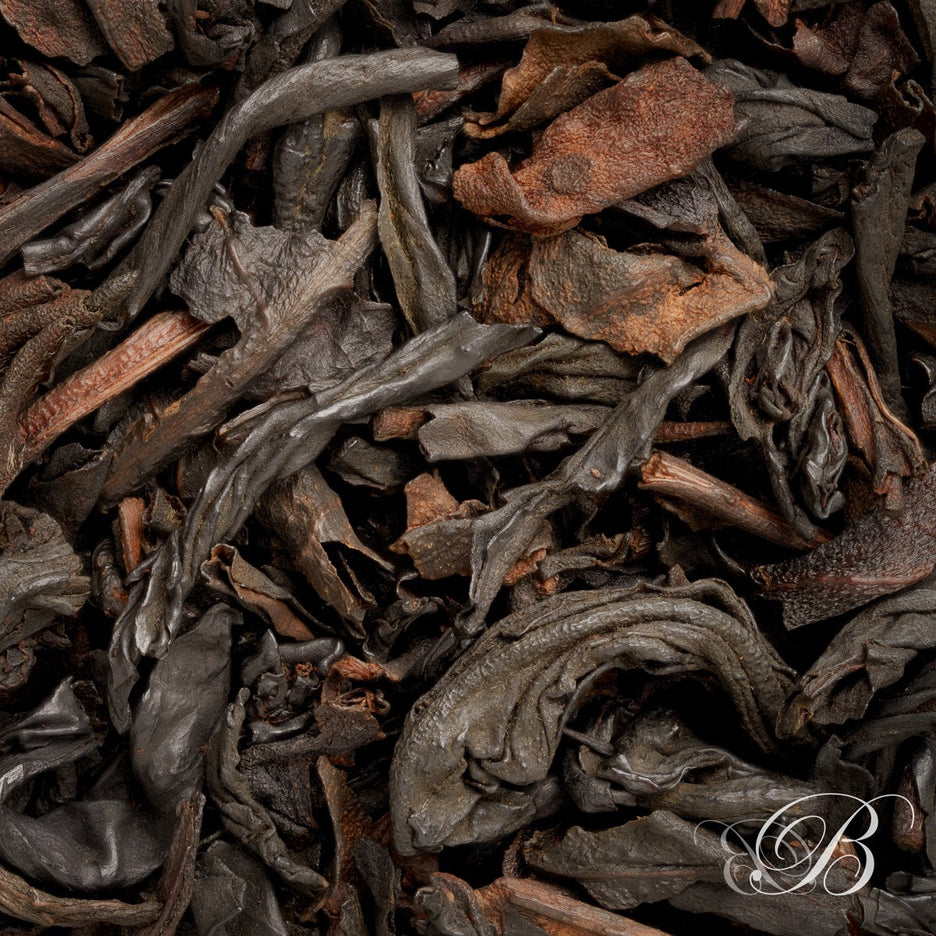
The name "Crocodile" belongs to an old terminology that originated in European trade, designating particularly robust smoked teas. In Taiwan, this name became established to describe not only the intensity of the smoking process, but also the appearance of the leaves once rolled, sometimes striated like reptile skin. The term was adopted by export companies, drawn to its ability to distinguish this Taiwanese style from other, more traditional teas.
Where a Lapsang Souchong evokes the pine forests of Tongmu, this Crocodile tea tells the story of Taiwanese coniferous forests, high-altitude mists, and the slow-burning hearths tended by artisans. In the cup, the difference from a Fujian Lapsang is evident as much in the tea's structure as in its cultural origins: a softer base, a more fragmented process, and smoking conceived as an additional layer rather than a foundational element. It is this paradox—an assertive intensity and a gentle construction—that gives this tea its unique identity, highly sought after for export and, over the years, one of the most recognizable hallmarks of Taiwanese smoking.
Food and tea pairing
The structured sweetness and smokiness of Formosa Lapsang Crocodile find a magnificent echo in a purée of oven-roasted sweet potato, enhanced with a drizzle of sesame oil and a few toasted seeds. The sweet potato offers a warm roundness that complements the tea's profile, while the subtle caramelization of the vegetable juices responds to the smokiness without being overpowered by it. The tea, served quite concentrated, brings a woody depth that balances the dish's sweetness. An unexpected, vegetal, comforting pairing that reveals the tea's indulgent and enveloping dimension.
Recipe based on Formosa Lapsang Crocodile tea
Gently sauté garlic and ginger in a little oil. Add diced eggplant and brown it. Stir in a spoonful of Formosa Lapsang Crocodile tea leaves, then deglaze with a mixture of light soy sauce and a splash of rice vinegar. Add a little stock and simmer until the tea is very tender. Strain the leaves before serving. The tea adds a smoky depth that structures the dish, while the eggplant provides a silky sweetness that perfectly complements this signature Formosa tea.
10365
- Formosa with a smoky taste -
This blue-green tea offers a very powerful cup, with a pronounced smoky flavour. Ideal for a traditional English breakfast.
Born in Taiwan, Formosa Lapsang Crocodile is the result of a fusion between the Chinese heritage of Lapsang Souchong and the island's oolong genius. Smoking techniques originating from Fujian have been reinterpreted using entirely Taiwanese methods, sourced from small family farms in the Nantou district. The leaves, processed like a mid-grade oolong, typically oxidized between 50 and 70%, offer the ideal structure for smoking without sacrificing their suppleness or depth. These workshops, often attached to modest oolong farms, perpetuate a hybrid expertise where Chinese precision meets local sensibility.
Unlike Chinese Lapsang Souchong, Taiwanese smoking doesn't rely exclusively on solid pine. Depending on the region and season, producers use Taiwanese cypress (hinoki), longan wood, or a subtle blend of local softwoods. Each imparts a unique character to the smoke, making it drier or rounder, bolder or more diffuse. This choice of wood, rarely standardized, reflects the experimental nature of Taiwanese workshops, where the toasting, humidity, and height of the smoking racks are adjusted according to the desired result.
The process itself differs: in China, smoking Lapsang Souchong is historically associated with a final direct fire-drying after complete oxidation. In Taiwan, smoking can occur at two stages, either during intermediate drying or at the very end of the process, to create a more precise smoke. Artisans often work in small batches, in tea houses where the rooms are still heated by manually controlled hearths, a task that requires long hours of observation. Some workshops have traditional lofts where the smoked leaves are left to rest and homogenize before shaping.
The name "Crocodile" belongs to an old terminology that originated in European trade, designating particularly robust smoked teas. In Taiwan, this name became established to describe not only the intensity of the smoking process, but also the appearance of the leaves once rolled, sometimes striated like reptile skin. The term was adopted by export companies, drawn to its ability to distinguish this Taiwanese style from other, more traditional teas.
Where a Lapsang Souchong evokes the pine forests of Tongmu, this Crocodile tea tells the story of Taiwanese coniferous forests, high-altitude mists, and the slow-burning hearths tended by artisans. In the cup, the difference from a Fujian Lapsang is evident as much in the tea's structure as in its cultural origins: a softer base, a more fragmented process, and smoking conceived as an additional layer rather than a foundational element. It is this paradox—an assertive intensity and a gentle construction—that gives this tea its unique identity, highly sought after for export and, over the years, one of the most recognizable hallmarks of Taiwanese smoking.
10365
The Betjeman & Barton soul supplement
An elegant Taiwanese smoked tea, where sweetness and intensity respond to each other… for lovers of refined flavors.
You may also like
Last viewed products
Jusqu'ici mon préféré des thés fumés pour sa delicatesse
Chère cliente,
Nous sommes reconnaissants de votre avis. Un grand merci.
Super 🙏
Cher client,
Un grand merci pour votre avis !
de tous les Lapsang que j'ai bu dans ma vie , c'est de loin le meilleur !!
Cher client,
Un grand merci pour votre avis !
Thé noir de belle qualité, très fortement fumé
Chère cliente,
Nous sommes reconnaissants de votre avis et sommes ravis que vous appréciez ce petit trésor parmi les thés fumés. Un grand merci.