Green tea Chun Mee Organic
Organic China tea with sweet plum notes

Green tea Chun Mee Organic
100% secure payment
3 free samples with each order
Fast and free delivery for purchases over €65
Organic green tea with sweet notes of plum
This Organic green tea from China is perfect after a rich meal. Its name means "precious eyebrows". It is advisable to taste the second infusion which will have already released its astringency.
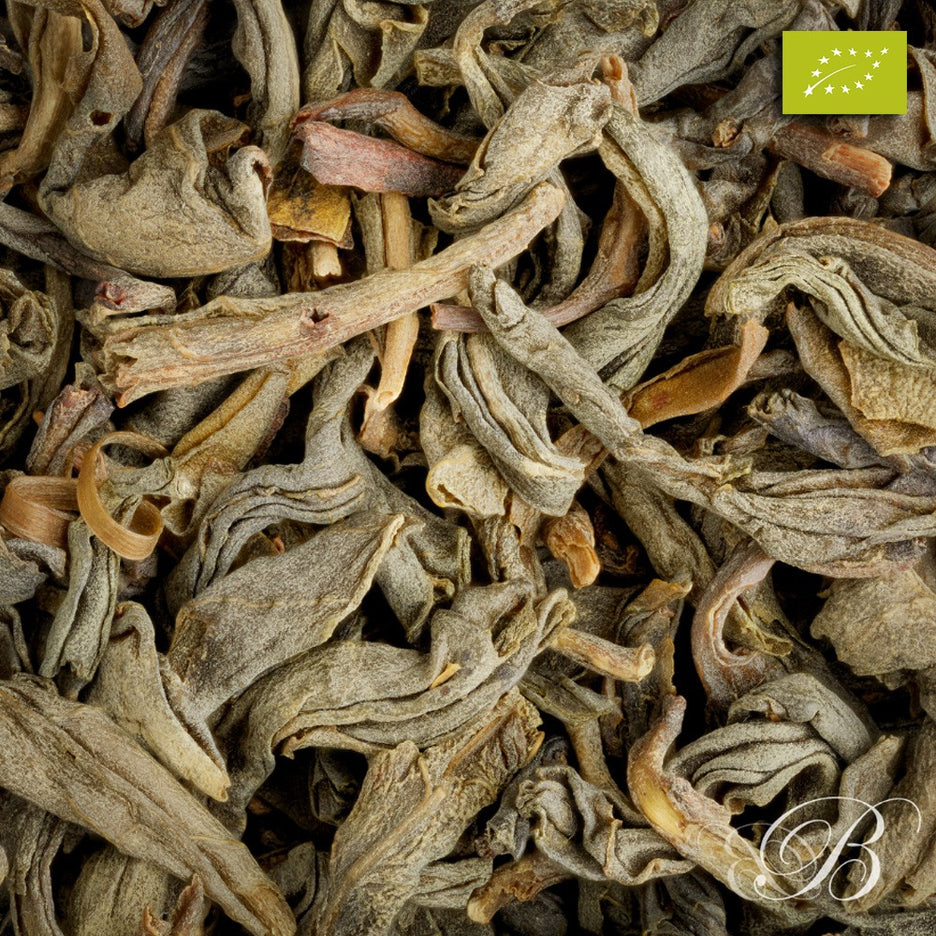
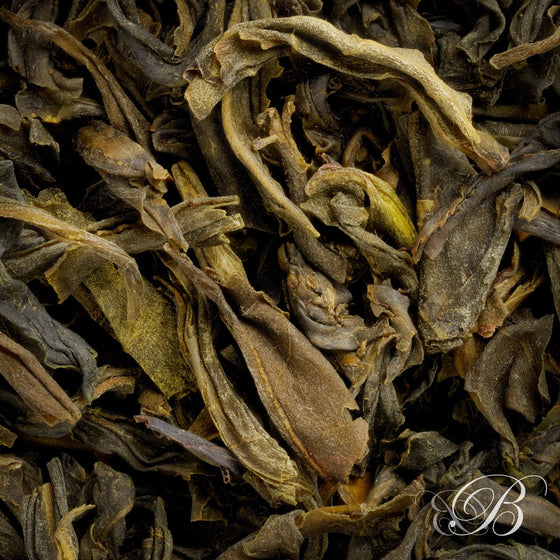
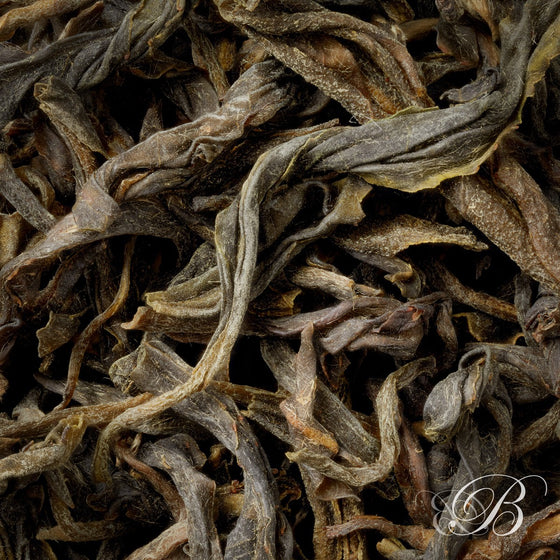
Green leaves, not very big, and twisted.
South of Shanghai, Zhejiang province unfolds its landscapes like a print: emerald hills shrouded in mist, bamboo valleys, terraced rice paddies, and lotus-fringed lakes. It is here, caressed by winds from the East China Sea, that one of China's most graceful green teas was born: Chun Mee, literally "precious eyebrows."
This poetic name originates from the shape of the leaves: finely rolled and slightly arched, they evoke the delicately drawn eyebrows of the beauties of the imperial court. Under the Ming and Qing dynasties, these curves symbolized elegance and perfection. By naming this tea "Chun Mee," the artisans paid homage to this ideal of natural and refined beauty, reflecting the intimate connection between the art of craftsmanship and the aesthetics of the world.
Its cultivation is a true human and agricultural odyssey in the heart of Zhejiang. It all begins at dawn, among misty hills, where each shoot is picked according to a ritual passed down since the Tang Dynasty. What makes Chun Mee cultivation extraordinary is the symbiosis between terroir, craftsmanship, and nature. The fields are planted on gentle slopes, bathed by the monsoon, where the loamy soil, enriched by sea breezes (the sea is 70 km from the tea gardens), and the humidity create a perfect alchemy.
In some villages, the harvest remains a festive and communal occasion: families and neighbors gather in the spring, perpetuating the cooperative spirit of the golden age of Chinese tea. At each stage, human intervention is paramount: after the selective picking of the first two leaves and the bud, the leaves are immediately withered and then tossed in wood-fired woks, braving the humidity, in order to preserve all their freshness.
One of the most iconic scenes involves a team of women tirelessly rolling the leaves on bamboo trays until they achieve the characteristic fine, even twist. This meticulous work is akin to assembling a natural jewel: too much agitation and the leaf breaks, too little and it doesn't curl. This twisting is far from a simple repetitive gesture: for a master craftsman, each batch is unique, as the ambient temperature, humidity, and even atmospheric pressure dictate the rhythm of the rolling process.
The magic of Chun Mee also lies in the diversity of flavors resulting from this slow process: the leaf develops a vegetal, sometimes floral or fruity palette, blending sweetness, minerality, and a tangy, almost vibrant note that lingers on the palate. Local tradition dictates that this tea be prepared with fresh water from mountain rivers to reveal its pale yellow hues and pure aromas. Some master brewers claim that the morning water, more "alive" in their view, elevates the first cup, reinforcing the legend of the terroir's soul infused into each bowl.
Beyond the gesture and the taste, the culture of Chun Mee is therefore an invitation to attention, patience, and observation of living things; a sensory and human experience, at the crossroads of history, climate, and the hand of man.
Food and tea pairings
For a vibrant pairing, try organic Chun Mee with sea bream ceviche, enhanced with an exotic touch (pomegranate and passion fruit pearls). Its delicate acidity complements the "cooked" lime and ignites with the chili. Fruity notes of juicy plum soften this tropical effervescence, while its vegetal freshness caresses the palate like a clear wave. Between silky sweetness and sun-kissed zest, this sensual pairing brings continents together: Asia and South America meet in a kiss of citrus, sea spray, and light.
Recipe based on organic Chun Mee green tea
Imagine a bamboo basket lined with organic Chun Mee leaves, where the line-caught sea bass slowly reveals itself, enveloped in jade-green mists... Arrange the fillets on this bed of precious leaves, scattered with lemongrass stalks and slices of fresh ginger—a verdant architecture that promises exoticism. Pour a concentrated Chun Mee infusion (15 g/liter, 75°C) over the basket; the steam becomes a fragrant alcove, infusing the fish with tangy, fruity, almost floral notes. Cover for 12–15 minutes and let the vaporous magic work its charm.
10500
Organic green tea with sweet notes of plum
This Organic green tea from China is perfect after a rich meal. Its name means "precious eyebrows". It is advisable to taste the second infusion which will have already released its astringency.
Green leaves, not very big, and twisted.
South of Shanghai, Zhejiang province unfolds its landscapes like a print: emerald hills shrouded in mist, bamboo valleys, terraced rice paddies, and lotus-fringed lakes. It is here, caressed by winds from the East China Sea, that one of China's most graceful green teas was born: Chun Mee, literally "precious eyebrows."
This poetic name originates from the shape of the leaves: finely rolled and slightly arched, they evoke the delicately drawn eyebrows of the beauties of the imperial court. Under the Ming and Qing dynasties, these curves symbolized elegance and perfection. By naming this tea "Chun Mee," the artisans paid homage to this ideal of natural and refined beauty, reflecting the intimate connection between the art of craftsmanship and the aesthetics of the world.
Its cultivation is a true human and agricultural odyssey in the heart of Zhejiang. It all begins at dawn, among misty hills, where each shoot is picked according to a ritual passed down since the Tang Dynasty. What makes Chun Mee cultivation extraordinary is the symbiosis between terroir, craftsmanship, and nature. The fields are planted on gentle slopes, bathed by the monsoon, where the loamy soil, enriched by sea breezes (the sea is 70 km from the tea gardens), and the humidity create a perfect alchemy.
In some villages, the harvest remains a festive and communal occasion: families and neighbors gather in the spring, perpetuating the cooperative spirit of the golden age of Chinese tea. At each stage, human intervention is paramount: after the selective picking of the first two leaves and the bud, the leaves are immediately withered and then tossed in wood-fired woks, braving the humidity, in order to preserve all their freshness.
One of the most iconic scenes involves a team of women tirelessly rolling the leaves on bamboo trays until they achieve the characteristic fine, even twist. This meticulous work is akin to assembling a natural jewel: too much agitation and the leaf breaks, too little and it doesn't curl. This twisting is far from a simple repetitive gesture: for a master craftsman, each batch is unique, as the ambient temperature, humidity, and even atmospheric pressure dictate the rhythm of the rolling process.
The magic of Chun Mee also lies in the diversity of flavors resulting from this slow process: the leaf develops a vegetal, sometimes floral or fruity palette, blending sweetness, minerality, and a tangy, almost vibrant note that lingers on the palate. Local tradition dictates that this tea be prepared with fresh water from mountain rivers to reveal its pale yellow hues and pure aromas. Some master brewers claim that the morning water, more "alive" in their view, elevates the first cup, reinforcing the legend of the terroir's soul infused into each bowl.
Beyond the gesture and the taste, the culture of Chun Mee is therefore an invitation to attention, patience, and observation of living things; a sensory and human experience, at the crossroads of history, climate, and the hand of man.
10500
The Betjeman & Barton soul supplement
A universal classic of green tea, renowned for its smoothness and evocative shape: a journey into the
largest gardens in Zhejiang.
Last viewed products