Japan tea Genmaicha

Lightly salted Japanese tea

Regular price 11,20 €
Sale price 11,20 € Regular price 11,20 €
Unit price  per 
Tax included. Shipping calculated at checkout.
bulk packaging
Thé vert japonais Genmaicha - Thés

Japan tea Genmaicha

100% secure payment

3 free samples with each order

Fast and free delivery for purchases over €65

Tasting moment:
Tasting moment: Tout au long de la journée
Infusion time:
Infusion time: 2-3 min
Water temperature:
Water temperature: 80°C

- Green tea slightly salty -


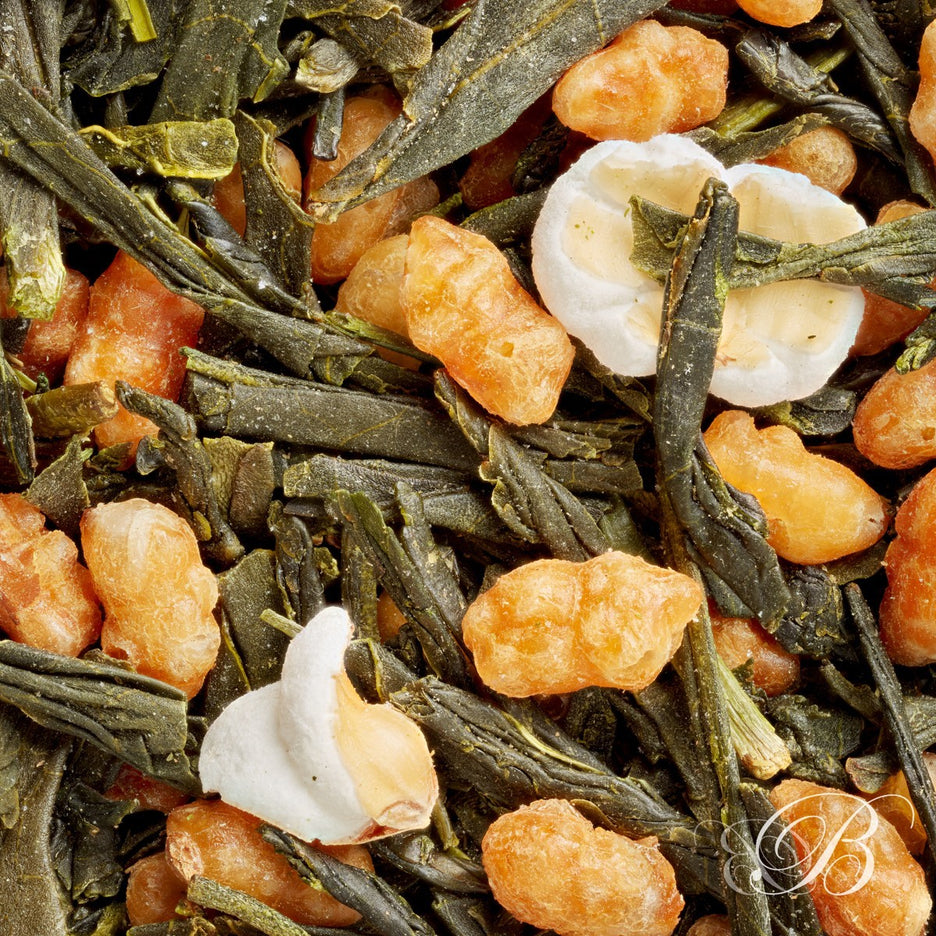
This tea from Japan is actually a blend of green tea, grilled rice and crispy rice. Very popular in Japan, this green tea is both suprising and delicate. This tea will be enjoyed with no milk. It is the ideal drink to go with your savoury meals.

Genmaicha, the embodiment of a certain Japanese way of life, has its roots in the ancestral lands of Uji, on the outskirts of Kyoto, and in the alluvial plains of the Akita region, the source of the brown rice cultivated for this unique blend. This tea finds its origins in the rural simplicity of 15th-century Japan. According to the most famous legend, Genmaicha was born from the clumsy gesture of a certain Genmai, a servant who dropped grains of rice into his master's cup… A tragic yet pivotal episode: the flavor resulting from this accident so captivated the guests that it gave its name to the beverage, henceforth known as Genmai tea.

Far beyond the myth, the true story of Genmaicha is deeply rooted in Japanese popular culture. In feudal times, without access to the fine teas reserved for the aristocracy and temples, commoners, farmers, and artisans added roasted rice to their green tea to prolong its sweetness and make it more nourishing. The rice used, traditionally a short-grain brown rice from Akita or the Koshihikari plain, is carefully roasted and then blended with young sencha leaves harvested locally in the hills of Uji. This combination of two humble ingredients, both symbols of the land and human labor, has become an emblem of conviviality and unpretentious indulgence.

Genmaicha, initially nicknamed "poor man's tea," is now a staple in Japanese homes. It's enjoyed hot, at any time of day, in small cups. On the family meal table, after rice or dashi broth, its aromas of grain, nuttiness, and a touch of salt create a comforting blend, ideal for soothing the palate after a spicy dish or for a simple moment of meditation. It pairs wonderfully with even the simplest Japanese cuisine, but also with festive occasions; Genmaicha is, in fact, central to some New Year's rituals, where it's sometimes combined with umeboshi (dried and salted plum).

This tea owes much of its appeal to its accessibility: with moderate caffeine and far less astringency than pure sencha, it's easy to drink, even in the evening. This explains its widespread popularity: throughout the 20th century, Genmaicha spread beyond Japan, carried by migration, the opening up of international cuisine, and then the vogue for natural products towards the end of the century. The first European tea houses to feature it were the major French institutions (particularly in Paris), and it gradually won over Michelin-starred chefs and connoisseurs, captivated by its unique profile where vegetal notes blend with toasty aromas. Today, it's enjoyed all over the world: in Europe, its success stems from the search for more digestible and comforting alternatives to traditional teas, and from a fascination with Japanese culinary aesthetics.

What many people don't realize is that Genmaicha is also a tea to be savored. During brewing, some of the puffed rice grains pop on the surface with a soft crackling sound, reminiscent of old-fashioned hearths and family kitchens where rice was roasted over an open flame. This subtle, almost intimate sound is part of the ritual: it heralds the coming richness and connects the drinker to a domestic, humble, and warm Japan. Genmaicha is not just a flavor; it's an atmosphere, a sonic and gustatory memory linked to the daily life of the Japanese people.

Food and tea pairings
While Genmaicha is often enjoyed throughout a savory meal, it's quite surprising when paired with a sweet treat at teatime. A cousin of the brownie, the blondie, with its roasted pecans and white chocolate chips, invites you to an unexpected sensory encounter. The buttery, soft, and caramelized batter enhances the tea's nutty notes, amplifying the warm, cereal-like flavor of the puffed rice with each bite. The blondie's richness perfectly balances the tea's light finish, cutting through the sweetness without diminishing it. The perfect harmony lies in how the tea envelops the palate, refreshing and revitalizing the sweetness, creating a truly surprising duo.

Recipe based on Genmaicha green tea
Here's a truly elegant, delicate, and deeply umami recipe... Genmaicha, with its toasted rice and low astringency, is perfect for replacing stock in a risotto. It brings a cereal richness and a nutty note that pairs ideally with Japanese mushrooms.

Ingredients (for 2 to 3 people)
• 2 tbsp Genmaicha green tea (Uji – Yabukita quality)
• 700 ml of water at 70–75°C (for making the infusion)
• 180 g of risotto rice (carnaroli or arborio)
• 1 finely chopped shallot
• 100g of fresh (or rehydrated) shiitake mushrooms
• 1 tbsp toasted sesame oil
• 1 tbsp of butter or neutral oil
• 1 small handful of golden sesame seeds
• Light soy sauce (optional)
• Salt (light), white pepper
• Optional (more Japanese): a drizzle of mirin or a little yuzu at the end of cooking

Preparation steps

Genmaicha broth preparation: Infuse 2 tbsp of Genmaicha in 700 ml of water at 70°C for 2–3 minutes, then strain.

Risotto steps:
1. Sauté the shiitake mushrooms in a knob of butter or a drizzle of sesame oil, then set aside.
2. In the same saucepan, sweat the shallot over low heat, add the rice and cook for 1 minute until it becomes pearly.
3. Prepare the Genmaicha broth by adding the broth ladle by ladle, then gently stir to achieve a creamy texture. Halfway through cooking, add the shiitake mushrooms, then adjust with a splash of mirin if desired.
4. Off the heat, add a drizzle of toasted sesame oil, season lightly and balance with a little soy sauce if necessary, rather than pure salt.

10410

- Green tea slightly salty -


This tea from Japan is actually a blend of green tea, grilled rice and crispy rice. Very popular in Japan, this green tea is both suprising and delicate. This tea will be enjoyed with no milk. It is the ideal drink to go with your savoury meals.

Genmaicha, the embodiment of a certain Japanese way of life, has its roots in the ancestral lands of Uji, on the outskirts of Kyoto, and in the alluvial plains of the Akita region, the source of the brown rice cultivated for this unique blend. This tea finds its origins in the rural simplicity of 15th-century Japan. According to the most famous legend, Genmaicha was born from the clumsy gesture of a certain Genmai, a servant who dropped grains of rice into his master's cup… A tragic yet pivotal episode: the flavor resulting from this accident so captivated the guests that it gave its name to the beverage, henceforth known as Genmai tea.

Far beyond the myth, the true story of Genmaicha is deeply rooted in Japanese popular culture. In feudal times, without access to the fine teas reserved for the aristocracy and temples, commoners, farmers, and artisans added roasted rice to their green tea to prolong its sweetness and make it more nourishing. The rice used, traditionally a short-grain brown rice from Akita or the Koshihikari plain, is carefully roasted and then blended with young sencha leaves harvested locally in the hills of Uji. This combination of two humble ingredients, both symbols of the land and human labor, has become an emblem of conviviality and unpretentious indulgence.

Genmaicha, initially nicknamed "poor man's tea," is now a staple in Japanese homes. It's enjoyed hot, at any time of day, in small cups. On the family meal table, after rice or dashi broth, its aromas of grain, nuttiness, and a touch of salt create a comforting blend, ideal for soothing the palate after a spicy dish or for a simple moment of meditation. It pairs wonderfully with even the simplest Japanese cuisine, but also with festive occasions; Genmaicha is, in fact, central to some New Year's rituals, where it's sometimes combined with umeboshi (dried and salted plum).

This tea owes much of its appeal to its accessibility: with moderate caffeine and far less astringency than pure sencha, it's easy to drink, even in the evening. This explains its widespread popularity: throughout the 20th century, Genmaicha spread beyond Japan, carried by migration, the opening up of international cuisine, and then the vogue for natural products towards the end of the century. The first European tea houses to feature it were the major French institutions (particularly in Paris), and it gradually won over Michelin-starred chefs and connoisseurs, captivated by its unique profile where vegetal notes blend with toasty aromas. Today, it's enjoyed all over the world: in Europe, its success stems from the search for more digestible and comforting alternatives to traditional teas, and from a fascination with Japanese culinary aesthetics.

What many people don't realize is that Genmaicha is also a tea to be savored. During brewing, some of the puffed rice grains pop on the surface with a soft crackling sound, reminiscent of old-fashioned hearths and family kitchens where rice was roasted over an open flame. This subtle, almost intimate sound is part of the ritual: it heralds the coming richness and connects the drinker to a domestic, humble, and warm Japan. Genmaicha is not just a flavor; it's an atmosphere, a sonic and gustatory memory linked to the daily life of the Japanese people.

10410

The Betjeman & Barton soul supplement

Surprising and delicately salty, genmaicha offers us a vibrant aromatic palette that shakes up our taste buds.