Korean Green Tea Oolong Dragon Organic Superior
Organic Korean tea with notes of toast and honey
100% secure payment
3 free samples with each order
Fast and free delivery for purchases over €65
- Green tea of Korea traditionally produced -
This green tea is harvested and produced traditionally in Korea.
Oolong tea which offers a dark cup with hints both powerful and sweet of toasted bread and honey.
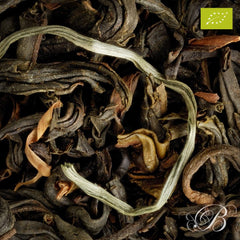
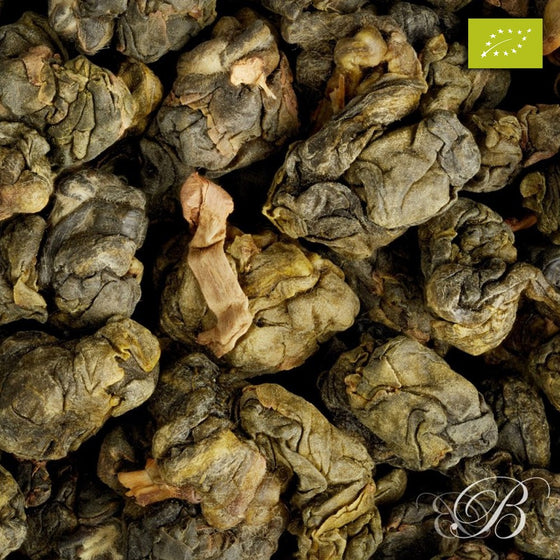
Beautiful dark well-twisted leaves.
Organic Dragon Oolong from Korea is a tea that should never have existed. In a country shaped by over a millennium of green tea, its appearance is almost an act of faith, or the intimate audacity of a producer who one day decides that a leaf can tell a different story. Even its name bears the mark of this cultural fusion: "oolong" and "wulong" refer to the same family of semi-oxidized teas, one derived from Western usage, the other faithful to the original Chinese pronunciation—two spellings for the same idea of refined transformation. This nuance alone speaks volumes about the tea's unique character.
In Korea, oolong tea remains a true rarity. While most of the best-known Korean teas (Woojeon, Sejak, Joongjak) now come from the volcanic island of Jeju, Dragon Organic Oolong follows a completely different path. It originates in the Hadong region, in the south of the country, the historical cradle of Korean tea. It is there, in these humid, granite valleys, that only a few families still master the delicate technique of partial oxidation, passed down with great discretion. These family farms, often certified organic, operate in opposition to the larger-scale production of Jeju, offering a small-batch, artisanal tea that is virtually absent from the international market.
Dragon Oolong is born precisely from this creative tension: preserving the purity and elegance inherent to Korean teas while embracing the aromatic complexity offered by measured oxidation. It's a bold undertaking, and that's why this tea remains one of the rarest in the country, produced in minute quantities, sustained by a know-how that survives in only a few villages.
Oxidation here is not a stylistic choice. It is an artistic gesture, carefully controlled between 30 and 45%, a threshold at which the leaves begin to transform without ever losing their essential nature. Over the hours, under the watchful eye of the master, the vibrant catechins of green tea soften, transmuting into more complex compounds, giving rise to the round, warm, slightly pastry-like texture that distinguishes great oolongs of character. The slightest excess would be fatal, but too timid an oxidation would deprive the tea of its soul. Everything then hinges on this almost instinctive decision: to stop the process at the precise moment when the leaf speaks for itself.
Rolling is the other cornerstone of this tea. The leaves, worked with deliberate slowness, form sweeping spirals, as if each movement seeks to imbue the tea with a breath, an intention. This technique, passed down from master to disciple, never produces two perfectly identical teas. In a region like Hadong, where the gardens are tiny and the batches confidential, this shaping takes on an almost artistic dimension.
Dragon Organic Oolong is also distinguished by its measured theine content. Gently brewed, it reveals as many amino acids as caffeine, offering a clean, calm energy without the jitters caused by some highly oxidized teas.
Tasting a Korean Organic Dragon Oolong is to enter a realm of little-explored excellence: that of a tea crafted in very small quantities, outside the major historical terroirs, but with remarkable precision. This tea does not seek to imitate China or Taiwan, nor to reproduce the conventions of Korean green tea. It asserts its own identity, poised between freshness and depth, delicacy and character. Each harvest reveals a rare mastery, a perfectly calibrated gesture, and the quiet ambition of a producer aiming for the level of the finest teas.
Food and tea pairing
Hadong's Organic Dragon Oolong pairs beautifully with a seared pink veal tataki, drizzled with white sesame oil and garnished with a few slivers of preserved lemon. The tea's subtle oxidation envelops the tenderness of the meat, while its honeyed, pastry-like nuances highlight the veal's natural sweetness. The silky, luminous infusion cuts through the richness, refreshes the palate, and prolongs the delicate aroma of sesame. The result is a contrast of great elegance, precise and delicate, where the tea reveals its inherent nobility without ever overpowering the dish.
Recipe based on Superior Organic Korean Oolong Dragon Tea
Organic Dragon Oolong tea shines in a dry tea praline, perfect for sprinkling over a dessert or enjoying on its own. Lightly toast hazelnuts and almonds, then blend them while still warm with brown sugar. Next, add the finely ground tea (obtained by grinding the dried leaves) to flavor the praline without weighing it down. The Dragon tea imparts a vegetal, toasted, almost pastry-like touch that intensifies the nutty depth. This crunchy and fragrant tea praline is a delightful addition to a roasted pear, dark chocolate, or even simple frozen yogurt.
- Green tea of Korea traditionally produced -
This green tea is harvested and produced traditionally in Korea.
Oolong tea which offers a dark cup with hints both powerful and sweet of toasted bread and honey.
Beautiful dark well-twisted leaves.
Organic Dragon Oolong from Korea is a tea that should never have existed. In a country shaped by over a millennium of green tea, its appearance is almost an act of faith, or the intimate audacity of a producer who one day decides that a leaf can tell a different story. Even its name bears the mark of this cultural fusion: "oolong" and "wulong" refer to the same family of semi-oxidized teas, one derived from Western usage, the other faithful to the original Chinese pronunciation—two spellings for the same idea of refined transformation. This nuance alone speaks volumes about the tea's unique character.
In Korea, oolong tea remains a true rarity. While most of the best-known Korean teas (Woojeon, Sejak, Joongjak) now come from the volcanic island of Jeju, Dragon Organic Oolong follows a completely different path. It originates in the Hadong region, in the south of the country, the historical cradle of Korean tea. It is there, in these humid, granite valleys, that only a few families still master the delicate technique of partial oxidation, passed down with great discretion. These family farms, often certified organic, operate in opposition to the larger-scale production of Jeju, offering a small-batch, artisanal tea that is virtually absent from the international market.
Dragon Oolong is born precisely from this creative tension: preserving the purity and elegance inherent to Korean teas while embracing the aromatic complexity offered by measured oxidation. It's a bold undertaking, and that's why this tea remains one of the rarest in the country, produced in minute quantities, sustained by a know-how that survives in only a few villages.
Oxidation here is not a stylistic choice. It is an artistic gesture, carefully controlled between 30 and 45%, a threshold at which the leaves begin to transform without ever losing their essential nature. Over the hours, under the watchful eye of the master, the vibrant catechins of green tea soften, transmuting into more complex compounds, giving rise to the round, warm, slightly pastry-like texture that distinguishes great oolongs of character. The slightest excess would be fatal, but too timid an oxidation would deprive the tea of its soul. Everything then hinges on this almost instinctive decision: to stop the process at the precise moment when the leaf speaks for itself.
Rolling is the other cornerstone of this tea. The leaves, worked with deliberate slowness, form sweeping spirals, as if each movement seeks to imbue the tea with a breath, an intention. This technique, passed down from master to disciple, never produces two perfectly identical teas. In a region like Hadong, where the gardens are tiny and the batches confidential, this shaping takes on an almost artistic dimension.
Dragon Organic Oolong is also distinguished by its measured theine content. Gently brewed, it reveals as many amino acids as caffeine, offering a clean, calm energy without the jitters caused by some highly oxidized teas.
Tasting a Korean Organic Dragon Oolong is to enter a realm of little-explored excellence: that of a tea crafted in very small quantities, outside the major historical terroirs, but with remarkable precision. This tea does not seek to imitate China or Taiwan, nor to reproduce the conventions of Korean green tea. It asserts its own identity, poised between freshness and depth, delicacy and character. Each harvest reveals a rare mastery, a perfectly calibrated gesture, and the quiet ambition of a producer aiming for the level of the finest teas.
The Betjeman & Barton soul supplement
A Korean masterpiece, the Organic Dragon Oolong unites purity and complexity in an infusion that reinvents an ancestral know-how.
You may also like

Thailand tea Oolong Jing Shuan Organic Superior
Organic Thai tea with a special taste
Add to cart

Korean Tea Woojeon Organic Superior
Organic Korean tea with hazelnut notes
Add to cart

Korean green tea Joongjak Organic Superior
Organic Korean tea with notes of melon and cream
Add to cart
Last viewed products