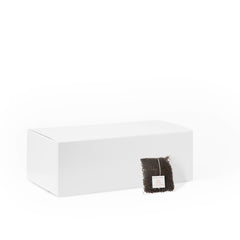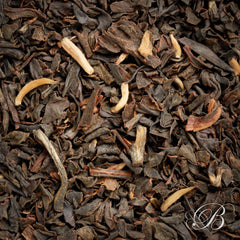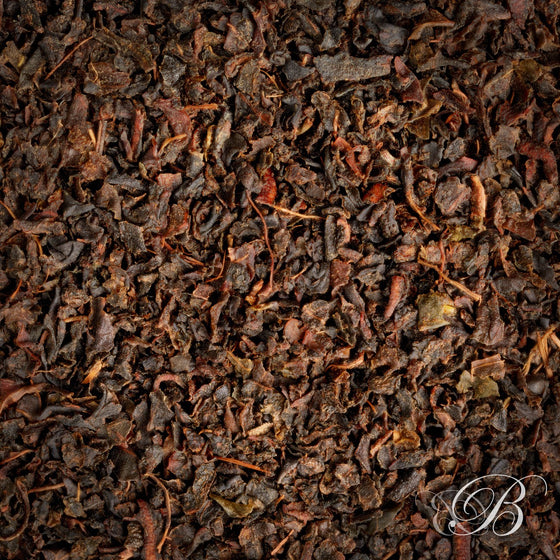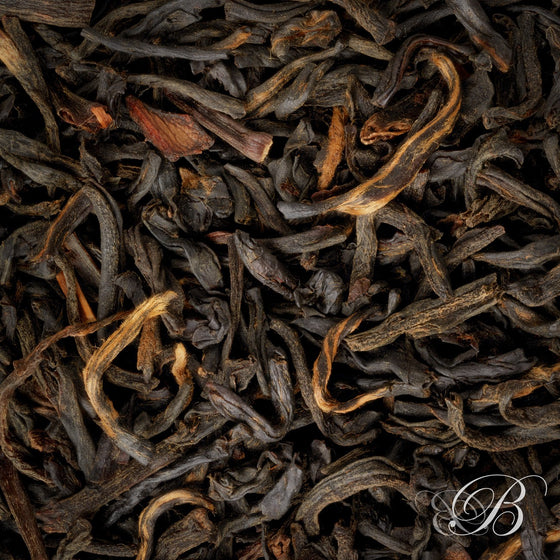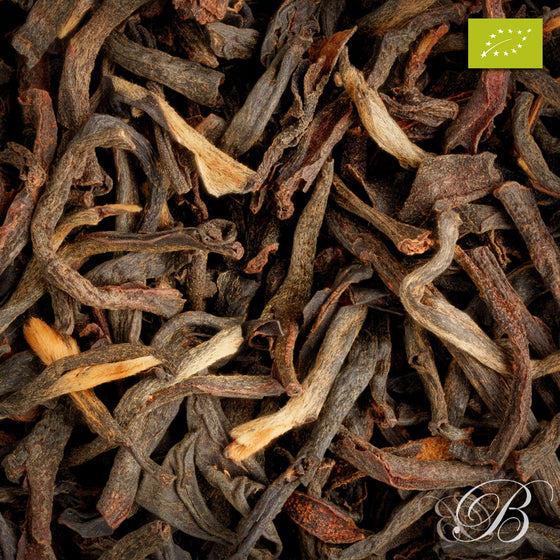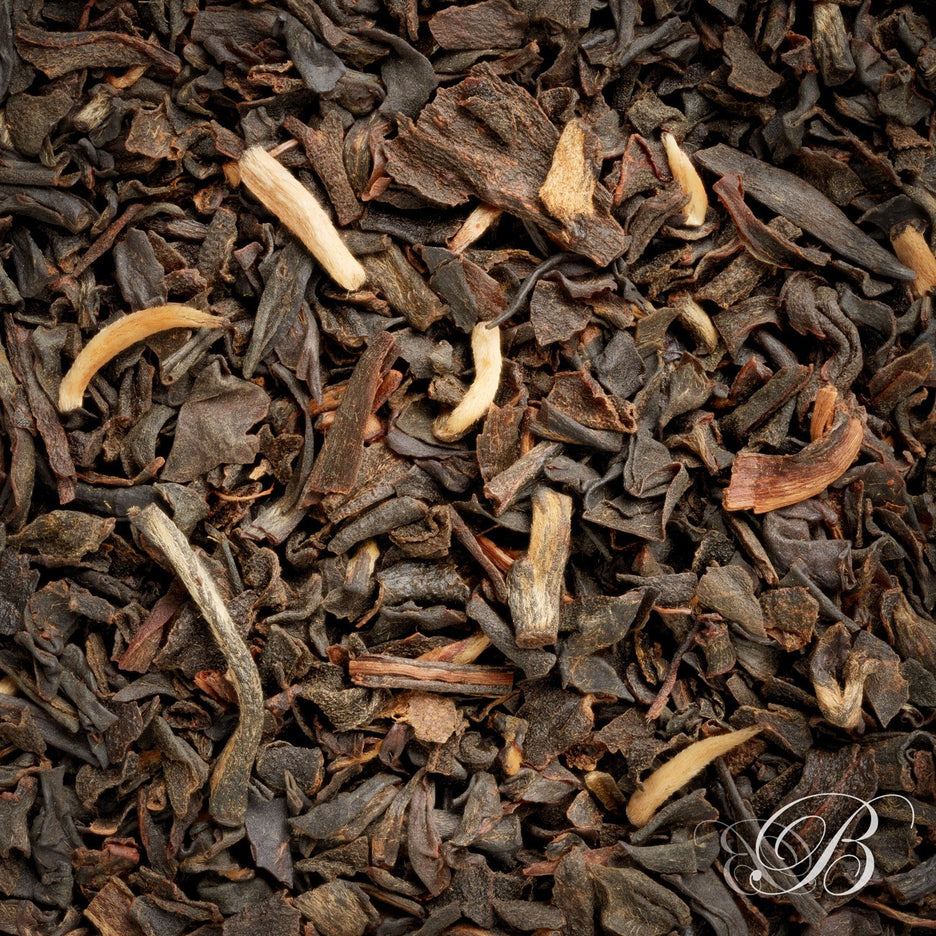
Assam holds a central place in the Indian tea tradition. It was in the heart of its valley, in the 19th century, that the wild tea plant was identified by local tribes and then domesticated, giving rise to one of the world's most renowned black teas. Thanks to its warm, humid climate, alluvial soils, and expertise passed down through generations, Assam reveals a rare combination of strength, density, and balance. The BOP grade, composed of broken leaves, offers a quick infusion with remarkable aromatic intensity.
In this legendary valley, the secret of "coin tea," or phalap, perpetuated by the Singpho tribe, illustrates the depth of tea culture in Assam. Long before the rise of large plantations, the Singpho gathered wild leaves, heated and slowly smoked them in bamboo stalks, then compressed them into discs: this ancestral process allowed the tea to be preserved for long periods and gave it powerful aromas of undergrowth, honey, and smoke. Not only does the preparation of phalap require mastery passed down within families, but it also embodies a social and symbolic ritual: each infusion marks gatherings, punctuates ceremonies, and makes sharing tea a sign of welcome and respect at the heart of the Singpho community.
It is in this spirit of admiration and fidelity to tradition that Maison Betjeman & Barton operates. Deeply sensitive to the cultural richness and human dimension that surround Assam, our selection aims to perpetuate this unique heritage. The Assam BOP chosen by Maison Betjeman & Barton fully embodies this legacy and our commitment to excellence: only leaves from a garden renowned for the consistency of its harvest, the richness of its terroir, and the expertise of its artisans are selected. This rigorous selection guarantees a cup of perfectly balanced intensity, the hallmark of exceptional Betjeman & Barton teas, and reflects the nobility of an authentic Assam, far removed from standardized varieties.