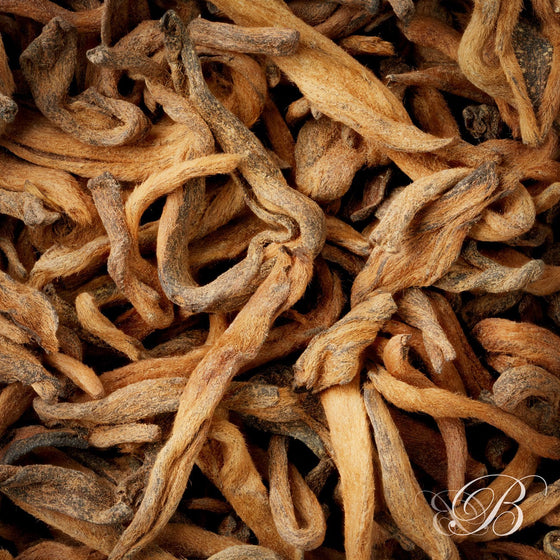
Black tea Pu Erh Yunnan
Delicate Chinese tea for a Pu-Er

Black tea Pu Erh Yunnan
100% secure payment
3 free samples with each order
Fast and free delivery for purchases over €65
- Black tea with delicate sweet taste -
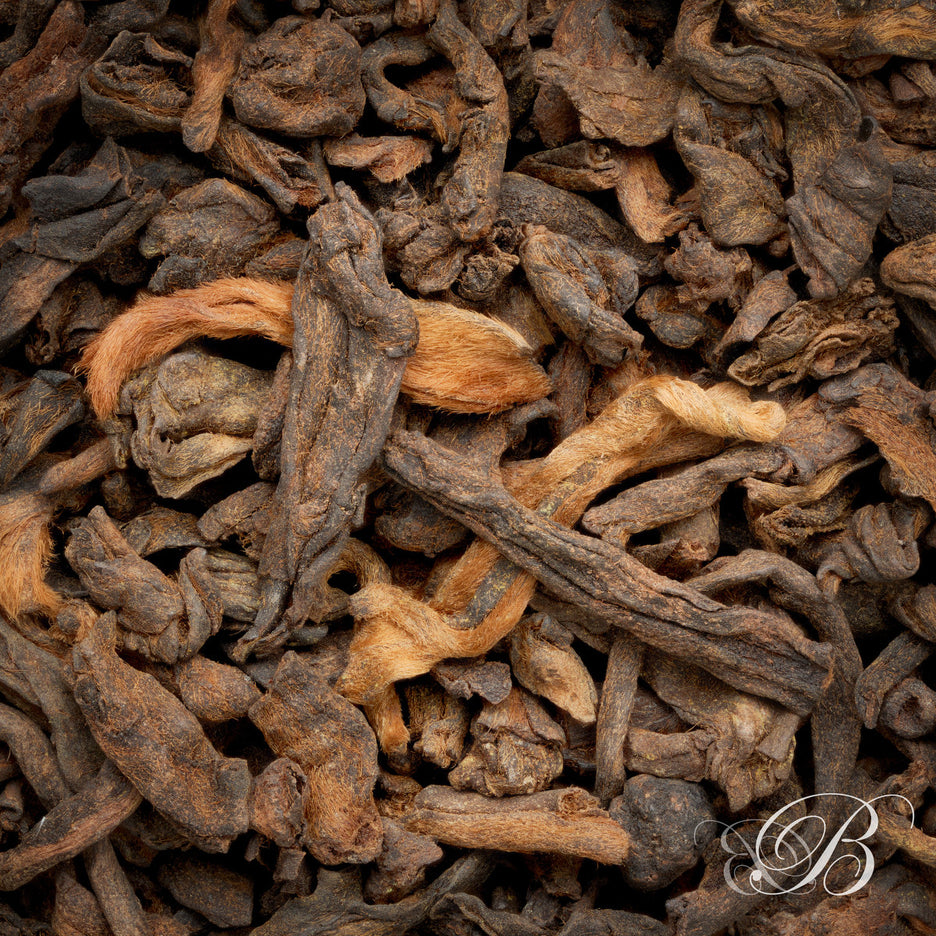
This black tea comes from South Yunnan. Once picked, the leaves are twisted and naturally dried, in the shade. Fermentation develops this absolutely unique earthy taste, slightly sweet, and gives a deep red infusion.
Pu-Er teas are aged teas that are sometimes quite old.
Black tea, dark tea, fermented tea… There are many words to name it, but do we really know the history of this unique, almost mythical tea?
In the beginning, it was just a humble caravan tea. Nothing more. And yet… When Chinese merchants set out to trade their leaves for the powerful horses of Tibet, something changed. To cross the steep valleys and high plateaus, thousands of kilometers had to be traveled. So the leaves were compressed into cakes and bricks, compact, solid, almost magical. Thus was born the Tea Horse Road, the backbone of Asia where caravans advanced slowly, as if under the protection of the mountains.
This simple gesture—pressing the leaves to survive the journey—became a signature. While the rest of China gradually abandoned these ancient forms, Yunnan preserved them like a treasure, a secret passed down from generation to generation. In these misty mountains, Pu-erh was transformed. It acquired a prestige no one could have imagined: the trading centers of the South teemed with activity, merchants flocked there, and connoisseurs competed to obtain the finest cakes. Pu-erh became a noble, powerful, and respected tea.
Then the 20th century changed everything. State-owned factories replaced local masters, reorganizing the world of Pu-erh. And paradoxically, this standardization gave rise to a new diversity: each factory developed its own style, its own secrets, its own character. Some became the true "Château Petrus" of modern Pu-erh.
History took a decisive turn in 1973. That year, a few technicians in Yunnan decided to investigate a phenomenon that had emerged by chance in Hong Kong: accelerated aging. In the city's hot, humid cellars, Pu-erh tea matured quickly, very quickly. So they tried to imitate nature. They piled the leaves, moistened them, and covered them with a tarpaulin. Under this covering, yeasts, fungi, and bacteria awoke. The temperature rose, reaching 50, sometimes 60°C. The workers stirred the mass as if it were a living organism, finally mastering the fermentation: cooked Pu-erh (shou) was born.
What used to take decades, man now replicates in a few weeks.
Today, when you raise your cup of Pu-erh to your lips, you're not just drinking tea. You're tasting a journey spanning centuries. From Tibetan caravans to modern factories, from sacred cakes to secret fermentations, Yunnan Pu-erh still carries the memory of time, mountains, and people. A tea that is constantly reborn, without ever betraying its original essence.
Food and tea pairings
Imagine a Scandinavian-inspired trifle, where Nordic sweetness meets the woody depth of Yunnan tea. In an elegant glass, a chestnut flour sponge cake, whipped vanilla cream, and a sweet apple-licorice compote are layered, a tribute to the delicacies of the North. Each layer complements the tea, extending its dark, frothy notes and illuminating its natural vanilla. The Pu-erh envelops the whole with a deep, almost meditative warmth. A delicately exotic trifle, revealing a rare harmony between dessert and tea.
Recipe based on Yunnan Pu Er black tea
Cooking eggs in Yunnan Pu-erh tea is a deeper, more earthy take on the famous Chinese tea egg. After an initial cooking, the shell is lightly cracked to allow the Pu-erh to infuse the white without breaking the shell. The egg then simmers in a dark infusion with notes of licorice, moss, and forest floor. The resulting marbled effect is more intense than with a classic black tea, and the flavor is more umami. The white is delicately flavored, and the yolk gains in richness. A delicious tribute to tradition, subtle, aromatic, and surprisingly elegant.
10263
- Black tea with delicate sweet taste -
This black tea comes from South Yunnan. Once picked, the leaves are twisted and naturally dried, in the shade. Fermentation develops this absolutely unique earthy taste, slightly sweet, and gives a deep red infusion.
Pu-Er teas are aged teas that are sometimes quite old.
Black tea, dark tea, fermented tea… There are many words to name it, but do we really know the history of this unique, almost mythical tea?
In the beginning, it was just a humble caravan tea. Nothing more. And yet… When Chinese merchants set out to trade their leaves for the powerful horses of Tibet, something changed. To cross the steep valleys and high plateaus, thousands of kilometers had to be traveled. So the leaves were compressed into cakes and bricks, compact, solid, almost magical. Thus was born the Tea Horse Road, the backbone of Asia where caravans advanced slowly, as if under the protection of the mountains.
This simple gesture—pressing the leaves to survive the journey—became a signature. While the rest of China gradually abandoned these ancient forms, Yunnan preserved them like a treasure, a secret passed down from generation to generation. In these misty mountains, Pu-erh was transformed. It acquired a prestige no one could have imagined: the trading centers of the South teemed with activity, merchants flocked there, and connoisseurs competed to obtain the finest cakes. Pu-erh became a noble, powerful, and respected tea.
Then the 20th century changed everything. State-owned factories replaced local masters, reorganizing the world of Pu-erh. And paradoxically, this standardization gave rise to a new diversity: each factory developed its own style, its own secrets, its own character. Some became the true "Château Petrus" of modern Pu-erh.
History took a decisive turn in 1973. That year, a few technicians in Yunnan decided to investigate a phenomenon that had emerged by chance in Hong Kong: accelerated aging. In the city's hot, humid cellars, Pu-erh tea matured quickly, very quickly. So they tried to imitate nature. They piled the leaves, moistened them, and covered them with a tarpaulin. Under this covering, yeasts, fungi, and bacteria awoke. The temperature rose, reaching 50, sometimes 60°C. The workers stirred the mass as if it were a living organism, finally mastering the fermentation: cooked Pu-erh (shou) was born.
What used to take decades, man now replicates in a few weeks.
Today, when you raise your cup of Pu-erh to your lips, you're not just drinking tea. You're tasting a journey spanning centuries. From Tibetan caravans to modern factories, from sacred cakes to secret fermentations, Yunnan Pu-erh still carries the memory of time, mountains, and people. A tea that is constantly reborn, without ever betraying its original essence.
10263
The Betjeman & Barton soul supplement
A Pu-Er that embodies all the charm of dark Yunnan teas: refined, sweet, soothing, delicately woody.
An ideal gateway to this fascinating world.
You may also like
Last viewed products
Parfait.