Thé blanc Tai-Mu

Light and delicate Chinese tea

Regular price 22,00 €
Sale price 22,00 € Regular price 22,00 €
Unit price  per 
Tax included. Shipping calculated at checkout.
bulk packaging
Thé blanc chinois Tai-Mu - Articles non suivis

Thé blanc Tai-Mu

100% secure payment

3 free samples with each order

Fast and free delivery for purchases over €65

Tasting moment:
Tasting moment: Tout au long de la journée
Infusion time:
Infusion time: 8 min
Water temperature:
Water temperature: 70°C

Color: White tea

Origin : Mount Taimu, Fuding district, Fujian province, Southeast China.

Region : Mount Taimu, nicknamed "the wonderland by the sea," rises majestically from the ocean, its steep peaks shrouded in perpetual mist. At an average altitude of 600 meters, its tea gardens benefit from a unique microclimate where sea air mingles with mountain breezes. This alchemy of land, sea, and sky (granite rocks, acidic soils, and constant cloud cover) shapes an exceptional terroir, recognized as the original birthplace of Chinese white tea.

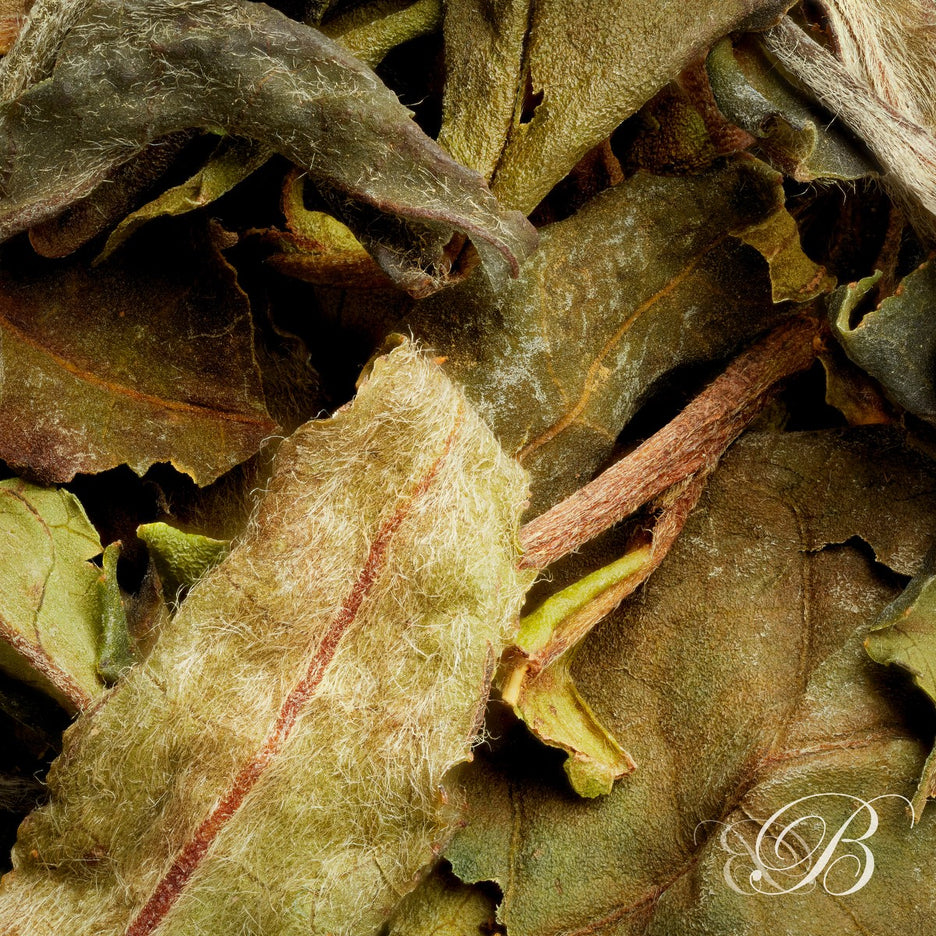
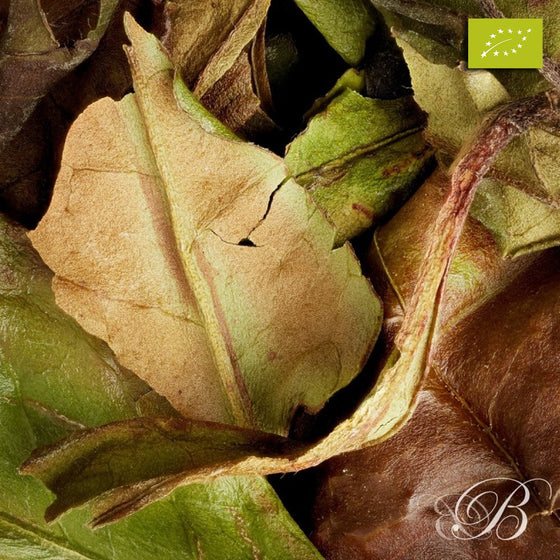
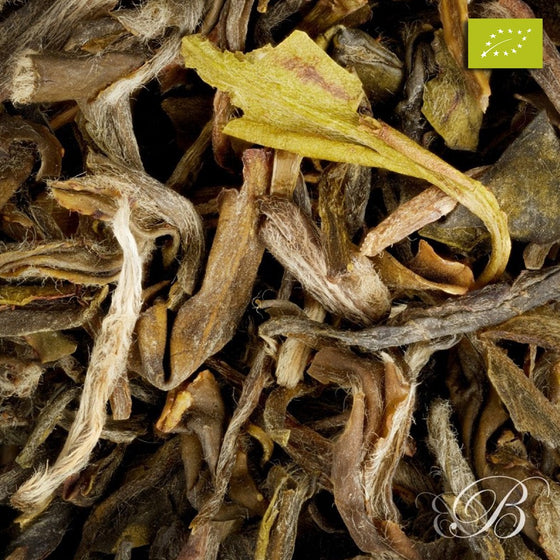
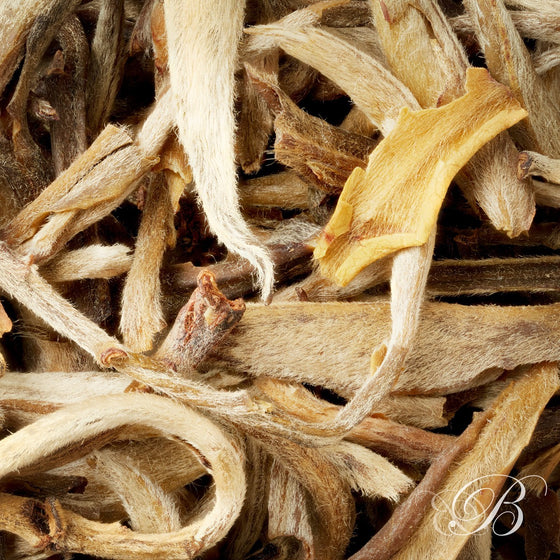
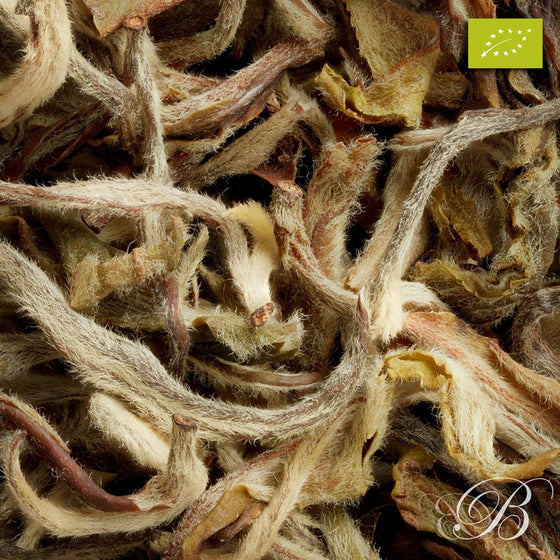
Appearance of the dried leaves: Downy buds of a luminous silvery white, covered with a fine protective down called hao. The leaves possess a natural elegance, both delicate and fleshy, testifying to an imperial harvest reserved for the first shoots of spring.

Infusion: The liqueur reveals a pale crystalline yellow color, almost translucent, with subtle golden reflections.

Tasting notes: On the nose, Tai Mu reveals a delicate bouquet of rose and white peony, resting on a base of dry grass and freshly cut hay. On the palate, the liqueur offers a silky and airy texture, developing nuances of green apple, a hint of umami, and a sweet, slightly vanilla finish. The overall impression is one of remarkable purity and spring freshness.

Tasting time : Thanks to its moderate theine content, Tai Mu can be enjoyed at any time of day, from waking up until dusk.

Tasting method : To reveal the finesse of Tai Mu, opt for a gentle infusion at 70°C for 7 to 8 minutes. A porcelain teapot offers a clear expression, but it can also be enjoyed in a gaiwan, those small covered cups where the tea is infused, uncovered, and then poured by tilting the lid to retain the leaves. This precise and sensory method allows for several successive infusions, each revealing a new facet of its floral notes, silky texture, and delicate finish.

At the summit of Mount Taimu, where the clouds brush the tops of the tea trees, the history of white tea has been unfolding for millennia. This sacred mountain range in Fujian, mentioned as early as the 8th century in Lu Yu's "Classic of Tea," is considered the original White Tea Mountain.

Legend roots this origin even deeper in mythical times. During the reign of Emperor Yao, nearly four thousand years ago, a woman named Langu lived on the slopes of Mount Taimu. A herbalist and healer, she cultivated a tea plant with silver buds that she called "Green Snow Bud." When a measles epidemic struck the region, decimating the children of the surrounding villages, Langu gathered the precious leaves from her tea plant and taught the families how to prepare them as an infusion. Miraculously, the children were cured. In gratitude for this blessing, the villagers venerated her as a deity, giving her the title "Taimu Niangniang," the Empress of Mount Taimu.

At the very end of the 18th century, modern white tea truly took shape. A tea merchant named Chen Huan, from the village of Bailiu, discovered a wild tea plant with exceptionally plump and downy buds on the slopes of Mount Taimu. He transplanted it to his village, giving rise to the cultivar "Fuding Da Bai," the Great White of Fuding, which remains today the benchmark variety for the production of the finest white teas.

The production of Tai Mu embodies the philosophy of "less is more." Unlike other tea varieties, white tea undergoes neither rolling, nor roasting, nor any mechanical intervention. The freshly picked leaves are simply laid out on bamboo racks to wither naturally in the sun or shade for fifty to sixty hours, depending on the weather. This controlled slowness allows for subtle enzymatic oxidation, which fully preserves the cellular structure of the leaves and their precious aromatic compounds. The final, traditional, and gentle drying completes this silent transformation. Thus is born a tea that the Chinese call the "living fossil" of the art of tea: the purest and most ancient expression of the Camellia sinensis leaf.

In Fuding, unlike other tea-producing regions, it is customary not to consume white tea within its first two years, especially the higher grades. Patient aging gradually reveals new aromatic dimensions, transforming the freshness of spring into a honeyed roundness. This tradition gives Tai Mu a rare temporal dimension: it is a tea that improves with age, inviting patience and contemplation.

Food and tea pairings
The orange blossom panna cotta, adorned with crystallized flower petals, enhances the Tai Mu tea with its silky texture and floral accents. The milky sweetness and orange notes complement the tea's rose-peony bouquet, while the flower crystals accentuate its springtime freshness. The combination creates a subtle interplay of umami, vanilla, and white fruit: this delicate touch reveals the purity of the Tai Mu without masking its airy lightness.

Recipe based on Tai Mu white tea from China
In this refined creation, raw scallops are marinated in a light, chilled Tai Mu infusion, revealing the tea's purity and floral nuances. A drizzle of citrus oil (mandarin and kaffir lime) adds vibrancy and brightness, while highlighting the white peony and rose bouquet characteristic of Tai Mu. A few grains of Himalayan pink sea salt enhance the dish's mineral balance, while its briny sweetness and elegance preserve the tea's subtlety, resulting in a sensory experience of transparency and harmony.

10330

Color: White tea

Origin : Mount Taimu, Fuding district, Fujian province, Southeast China.

Region : Mount Taimu, nicknamed "the wonderland by the sea," rises majestically from the ocean, its steep peaks shrouded in perpetual mist. At an average altitude of 600 meters, its tea gardens benefit from a unique microclimate where sea air mingles with mountain breezes. This alchemy of land, sea, and sky (granite rocks, acidic soils, and constant cloud cover) shapes an exceptional terroir, recognized as the original birthplace of Chinese white tea.

Appearance of the dried leaves: Downy buds of a luminous silvery white, covered with a fine protective down called hao. The leaves possess a natural elegance, both delicate and fleshy, testifying to an imperial harvest reserved for the first shoots of spring.

Infusion: The liqueur reveals a pale crystalline yellow color, almost translucent, with subtle golden reflections.

Tasting notes: On the nose, Tai Mu reveals a delicate bouquet of rose and white peony, resting on a base of dry grass and freshly cut hay. On the palate, the liqueur offers a silky and airy texture, developing nuances of green apple, a hint of umami, and a sweet, slightly vanilla finish. The overall impression is one of remarkable purity and spring freshness.

Tasting time : Thanks to its moderate theine content, Tai Mu can be enjoyed at any time of day, from waking up until dusk.

Tasting method : To reveal the finesse of Tai Mu, opt for a gentle infusion at 70°C for 7 to 8 minutes. A porcelain teapot offers a clear expression, but it can also be enjoyed in a gaiwan, those small covered cups where the tea is infused, uncovered, and then poured by tilting the lid to retain the leaves. This precise and sensory method allows for several successive infusions, each revealing a new facet of its floral notes, silky texture, and delicate finish.

At the summit of Mount Taimu, where the clouds brush the tops of the tea trees, the history of white tea has been unfolding for millennia. This sacred mountain range in Fujian, mentioned as early as the 8th century in Lu Yu's "Classic of Tea," is considered the original White Tea Mountain.

Legend roots this origin even deeper in mythical times. During the reign of Emperor Yao, nearly four thousand years ago, a woman named Langu lived on the slopes of Mount Taimu. A herbalist and healer, she cultivated a tea plant with silver buds that she called "Green Snow Bud." When a measles epidemic struck the region, decimating the children of the surrounding villages, Langu gathered the precious leaves from her tea plant and taught the families how to prepare them as an infusion. Miraculously, the children were cured. In gratitude for this blessing, the villagers venerated her as a deity, giving her the title "Taimu Niangniang," the Empress of Mount Taimu.

At the very end of the 18th century, modern white tea truly took shape. A tea merchant named Chen Huan, from the village of Bailiu, discovered a wild tea plant with exceptionally plump and downy buds on the slopes of Mount Taimu. He transplanted it to his village, giving rise to the cultivar "Fuding Da Bai," the Great White of Fuding, which remains today the benchmark variety for the production of the finest white teas.

The production of Tai Mu embodies the philosophy of "less is more." Unlike other tea varieties, white tea undergoes neither rolling, nor roasting, nor any mechanical intervention. The freshly picked leaves are simply laid out on bamboo racks to wither naturally in the sun or shade for fifty to sixty hours, depending on the weather. This controlled slowness allows for subtle enzymatic oxidation, which fully preserves the cellular structure of the leaves and their precious aromatic compounds. The final, traditional, and gentle drying completes this silent transformation. Thus is born a tea that the Chinese call the "living fossil" of the art of tea: the purest and most ancient expression of the Camellia sinensis leaf.

In Fuding, unlike other tea-producing regions, it is customary not to consume white tea within its first two years, especially the higher grades. Patient aging gradually reveals new aromatic dimensions, transforming the freshness of spring into a honeyed roundness. This tradition gives Tai Mu a rare temporal dimension: it is a tea that improves with age, inviting patience and contemplation.

10330

The Betjeman & Barton soul supplement

A vibrant floral bouquet in a crystal-clear cup, like a breath captured on Mount Taimu.