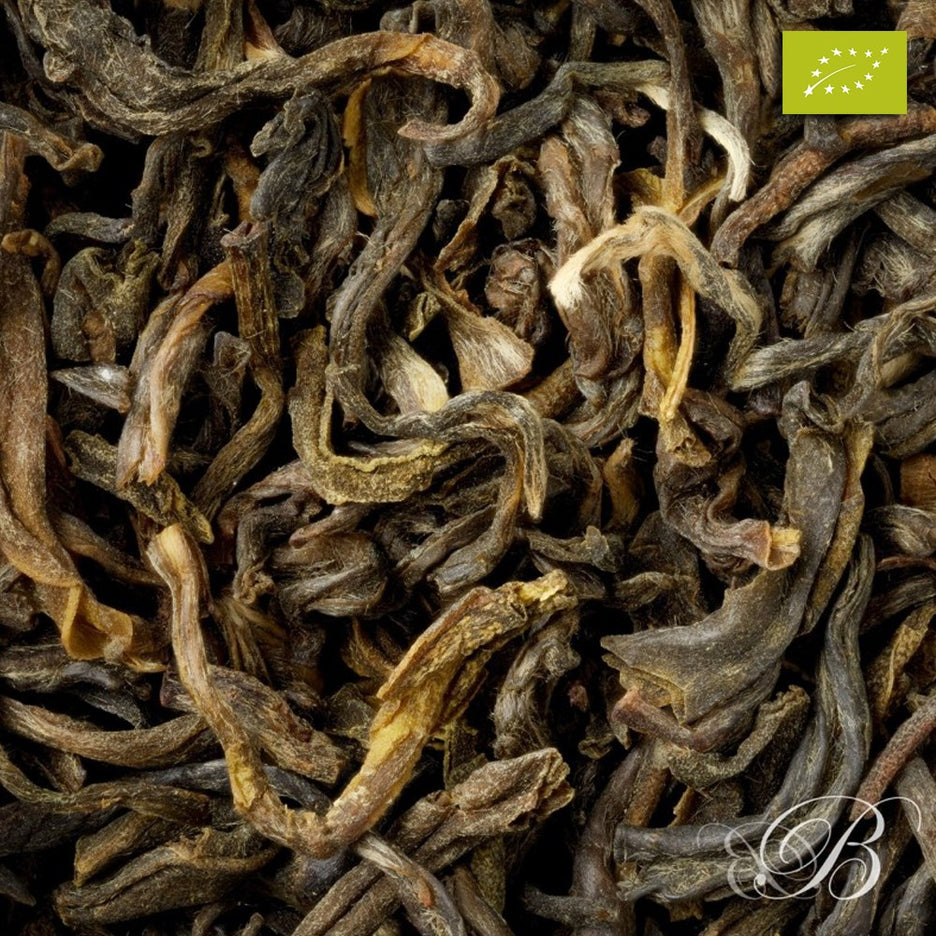
Thé du Népal Emerald Green Organic
Very fresh organic Nepalese tea
100% secure payment
3 free samples with each order
Fast and free delivery for purchases over €65
- Green tea from Nepal -
This green tea from Nepal is cultivated at a height of 2200m. The Nepal teas are quite similar, both in aromas and saviour.
Nepal's Organic Emerald Green embodies a unique expression of high-altitude green tea, at the crossroads of several great cultures without ever being a mere imitation. Grown on the eastern slopes of the Himalayas, it reveals its own distinct flavor profile, shaped by the altitude, the youth of the gardens, and a still very free, artisanal approach.
Unlike Chinese green teas, often processed using a wok-stirring technique that develops roasted, chestnut, or sometimes smoky notes, Nepalese Emerald Green favors a gentler transformation. The leaf is quickly heated to halt oxidation, then delicately rolled and dried to preserve its fresh, vegetal character without hardening it. The result is a luminous, airy green tea with no pronounced bitterness.
In contrast to Japanese green teas, steamed and often dominated by an intense greenness, briny notes, or very umami character, Nepalese green tea stands out with a more nuanced structure. Here, Emerald Green Organic focuses on balance, finesse, and aromatic transparency, with a drier, more crystalline sensation that allows the terroir to express itself without excessive technique.
It is precisely in this expression of terroir that the link with Darjeeling becomes evident. The Ilam region lies approximately 40 kilometers as the crow flies from Darjeeling, separated only by a political border, but sharing the same Himalayan foothills, the same climatic influences, and comparable altitudes. The gardens of Ilam thrive between 1,800 and 2,200 meters, in an environment of frequent mists, cool nights, and significant temperature variations—ideal conditions for developing leaves rich in aromatic complexity.
On tasting, Emerald Green is reminiscent of certain spring Darjeelings, with its floral freshness, delicate astringency, and that famous light muscatel note characteristic of great Himalayan teas. It possesses an elegant vivacity, a subtle minerality, and a clean, almost saline finish that clearly distinguishes this tea from more classic Asian profiles.
Tea cultivation in Nepal remains relatively recent compared to other major producing countries, and it is precisely this youthfulness that gives it its strength. The tea plants, often younger than those in India or China, develop a more tender, more expressive leaf, while the still largely preserved biodiversity of the gardens fosters natural, organic farming practices, without excessive use of inputs. Emerald Green tea is thus the product of rigorous organic practices, where human intervention remains present at every stage.
This Nepalese green tea is neither Chinese, nor Japanese, nor quite Darjeeling, yet it engages in a dialogue with each of them. It offers a freer interpretation of green tea, where its freshness is enhanced by a rare, high-altitude elegance. A connoisseur's tea, discreet and luminous, that reveals another facet of the Himalayas, still relatively unknown but profoundly refined.
Food and tea pairing
Organic Emerald Green tea from Nepal pairs perfectly with a fluffy, airy, and delicately vanilla-flavored pancake. Its cloud-like texture echoes the lightness of the tea, while the freshness of the infusion balances the sweetness of the cake. A touch of citrus zest or a drizzle of light syrup is all it takes to reveal the tea's subtle minerality and slight astringency, which cleanse the palate and prolong the tasting experience.
Recipe based on organic Emerald Green Nepalese green tea
To enhance a panna cotta, gently simmer heavy cream and whole milk with a touch of cane sugar, then infuse the tea generously in a cold infusion to gently capture its muscatel notes and vegetal freshness. Carefully strain, stir in gelatin or agar-agar, then pour into delicate glasses. When serving, accompany with white grapes roasted with honey and salted butter, sprinkled with crushed pistachios, to complement the silky texture and elegant astringency of the tea.
Nepal's Organic Emerald Green embodies a unique expression of high-altitude green tea, at the crossroads of several great cultures without ever being a mere imitation. Grown on the eastern slopes of the Himalayas, it reveals its own distinct flavor profile, shaped by the altitude, the youth of the gardens, and a still very free, artisanal approach.
Unlike Chinese green teas, often processed using a wok-stirring technique that develops roasted, chestnut, or sometimes smoky notes, Nepalese Emerald Green favors a gentler transformation. The leaf is quickly heated to halt oxidation, then delicately rolled and dried to preserve its fresh, vegetal character without hardening it. The result is a luminous, airy green tea with no pronounced bitterness.
In contrast to Japanese green teas, steamed and often dominated by an intense greenness, briny notes, or very umami character, Nepalese green tea stands out with a more nuanced structure. Here, Emerald Green Organic focuses on balance, finesse, and aromatic transparency, with a drier, more crystalline sensation that allows the terroir to express itself without excessive technique.
It is precisely in this expression of terroir that the link with Darjeeling becomes evident. The Ilam region lies approximately 40 kilometers as the crow flies from Darjeeling, separated only by a political border, but sharing the same Himalayan foothills, the same climatic influences, and comparable altitudes. The gardens of Ilam thrive between 1,800 and 2,200 meters, in an environment of frequent mists, cool nights, and significant temperature variations—ideal conditions for developing leaves rich in aromatic complexity.
On tasting, Emerald Green is reminiscent of certain spring Darjeelings, with its floral freshness, delicate astringency, and that famous light muscatel note characteristic of great Himalayan teas. It possesses an elegant vivacity, a subtle minerality, and a clean, almost saline finish that clearly distinguishes this tea from more classic Asian profiles.
Tea cultivation in Nepal remains relatively recent compared to other major producing countries, and it is precisely this youthfulness that gives it its strength. The tea plants, often younger than those in India or China, develop a more tender, more expressive leaf, while the still largely preserved biodiversity of the gardens fosters natural, organic farming practices, without excessive use of inputs. Emerald Green tea is thus the product of rigorous organic practices, where human intervention remains present at every stage.
This Nepalese green tea is neither Chinese, nor Japanese, nor quite Darjeeling, yet it engages in a dialogue with each of them. It offers a freer interpretation of green tea, where its freshness is enhanced by a rare, high-altitude elegance. A connoisseur's tea, discreet and luminous, that reveals another facet of the Himalayas, still relatively unknown but profoundly refined.
The Betjeman & Barton soul supplement
A high-altitude green tea, all finesse, whose muscatel nuances recall the grace of the most delicate Darjeeling.
You may also like

Korean Tea Woojeon Organic Superior
Organic Korean tea with hazelnut notes
Add to cart

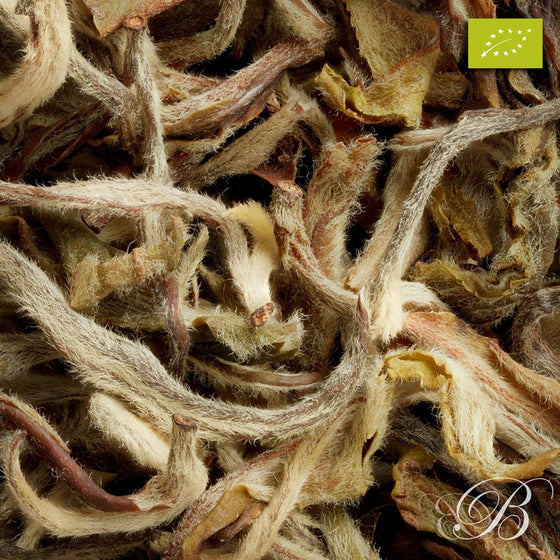
Nepal Tea Shangri La Organic Superior
Organic Nepalese tea with vanilla notes
Add to cart

Korean Green Tea Oolong Dragon Organic Superior
Organic Korean tea with notes of toast and honey
Add to cart

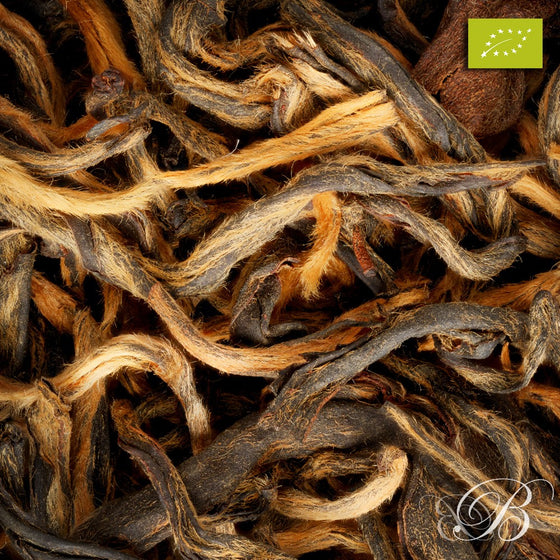
Nepal tea Gold Shangri La Organic Golden tips
Organic Nepalese tea with notes of fig
Add to cart
Last viewed products