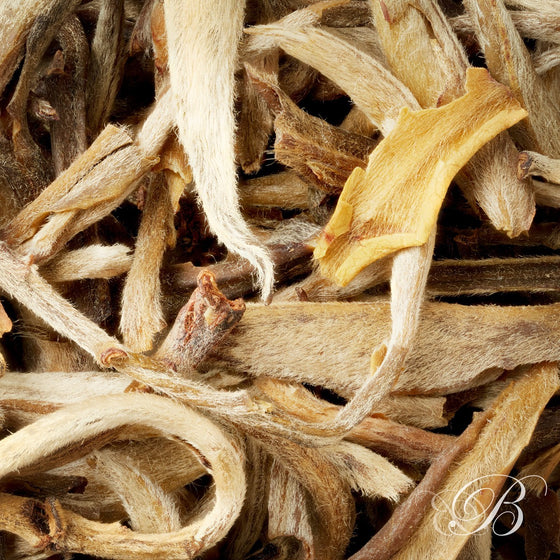
White tea White Pearl

Gunpowder green tea

- White tea very delicate -


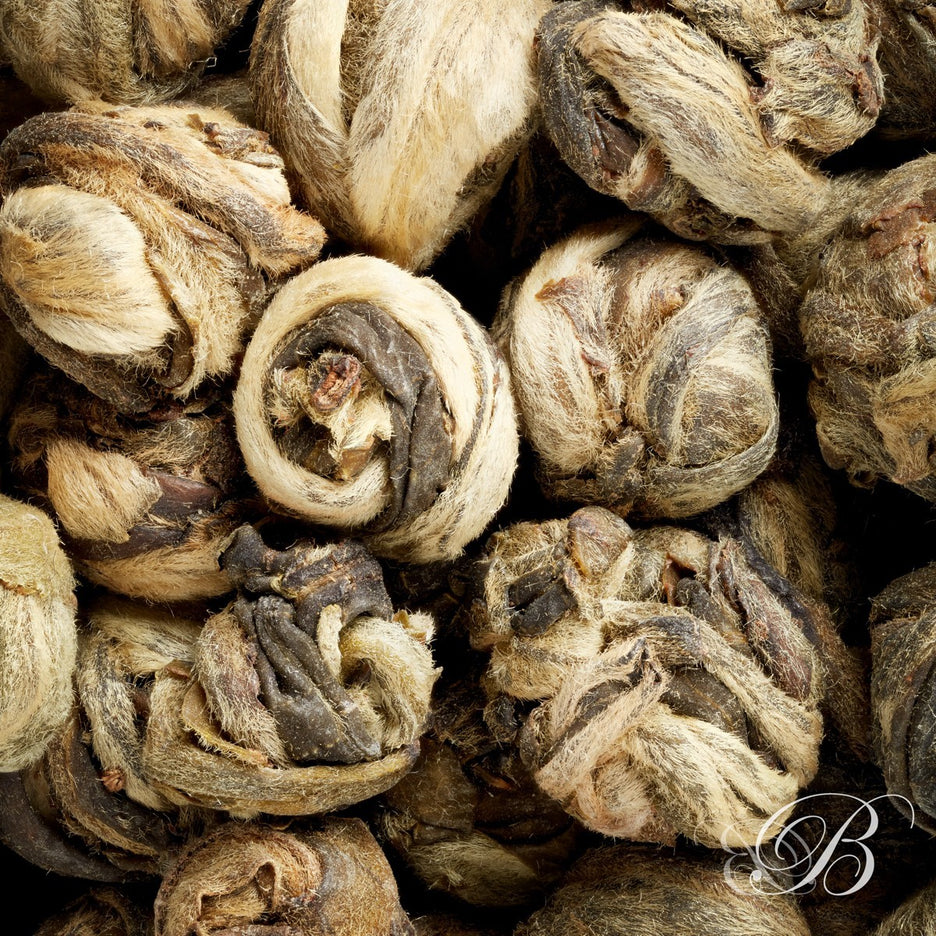
This China white tea comes from the province of Fujian (South of China) and more precisely from the Tai Mu Hills. The thin leaves are rolled in small balls. The steam and drying process is done in the open air, which let the tea develop sweet and fresh aromas as well as a very soft taste. Very delicate.

Read more
Regular price 26,57 €
Sale price 26,57 € Regular price 25,25 €
Unit price  per 
Tax included. Shipping calculated at checkout.
bulk packaging
Thé blanc White Pearl - Thés

White tea White Pearl

100% secure payment

3 free samples with each order

Fast and free delivery for purchases over €65

Tasting moment:
Tasting moment: Tout au long de la journée and Matin
Infusion time:
Infusion time: 8 min
Water temperature:
Water temperature: 70°C

- White tea very delicate -


This China white tea comes from the province of Fujian (South of China) and more precisely from the Tai Mu Hills. The thin leaves are rolled in small balls. The steam and drying process is done in the open air, which let the tea develop sweet and fresh aromas as well as a very soft taste. Very delicate.

For Western tea lovers, as for many others, there is a kind of silent magic that takes hold as soon as a tea appears in the form of a pearl. A simple sphere of leaves, held in the palm of the hand, suddenly seems to promise a secret. One never truly knows what it contains, but one senses that it will hold a revelation. Perhaps it is the fascination of the gesture: rolling, shaping, condensing a landscape into a single point. Perhaps it is the idea of ​​metamorphosis, this delightful anticipation of seeing what, just seconds before, was only a tiny kernel of leaves unfold. For Europeans, this visual ritual has become almost part of the pleasure of tea: a miniature theater, where the hot water plays the role of the inciting agent and the pearl that of the awakening protagonist.

White Pearls Tai Mu fits perfectly into this enchanting category. Born at the very beginning of April, when cool mists still envelop the Tai Mu mountains in northern Fujian, it results from a lightning-fast harvest: the first buds of the Da Bai cultivar, still pearly with sap and brimming with the sugars accumulated during the winter. In just a few hours, the pickers traverse the winding terraces to harvest the terminal bud and its first two leaves. Thus is born a raw material of great delicacy, bearing a vegetal freshness without astringency and a luminous sweetness capable of evoking the very breath of spring.

But what truly distinguishes White Pearls Tai Mu is not merely the grace of its harvest, but its belonging to a great family of rolled teas. Across China, this practice transcends terroirs and eras: in Yunnan, the Golden Pearls become burnished spheres, heavy with honey and spices; in Jinggu, jasmine embraces Da Bai buds in fragrant rituals; in Zhejiang, the gunpowder pearls unfold into crisp, vibrant notes; in the Yellow Mountains, the tiny Dishuixiang pearls release a silvery freshness. Even Oolongs, like Anxi's Tie Guan Yin, roll their leaves into compact spirals. White Pearls Tai Mu thus stands at the crossroads of a regional heritage and a universal tradition: gathering the essence of tea with a precise gesture, then allowing it to unfold at its own pace.

Then comes the moment of infusion, when the magic becomes visible. In a glass teapot, the scene unfolds like a slow curtain rising. As soon as the hot water envelops the pearl, it awakens: it sways, swells, then unfolds like a flower beneath the surface. The bud and young leaves unfurl with an almost choreographed grace, revealing a heart of delicate, silvery leaves.

And then comes a very particular, almost intimate emotion: that of seeing the whole leaf appear, intact, just as it was a few days earlier in the mountains of Fujian. This integrity is always surprising. A pearl opening is not merely an aesthetic movement, it is a revelation: the encounter between the artisan's hand and the plant in its purest form. Many Western enthusiasts find a profound charm in this, as if the tea were revealing its origin, its history, and its sincerity all at once.

The liquor, clear and luminous, extends this visual delicacy with an ethereal sweetness. Each sip seems to continue the dance begun in the teapot, a dance between vegetal freshness, discreet sweetness, and notes of almost tactile purity. Situated between the absolute grace of Yin Zhen and the more generous spontaneity of Bai Mu Dan, White Pearls Tai Mu unfolds a full and subtle expression of white tea: a tea capable of touching, with equal intensity, the discerning palates of Asian connoisseurs and the awestruck eyes of Western enthusiasts.

Food and tea pairings
The crystalline delicacy of White Pearls Tai Mu finds a perfect echo in a mille-feuille filled with pear slices and a light Tahitian vanilla cream. More floral and ethereal than the Madagascar variety, it complements the tea's sweetness without overpowering it. The pear, in turn, awakens the Tai Mu's vegetal freshness and prolongs its notes of sap and white honey. As for the crisp puff pastry, it creates a delicate textural contrast that highlights the silky purity of the infusion. A luminous, sophisticated pairing, worthy of a great spring white tea.

Recipe based on Chinese White Pearls Tai Mu tea
Prepare a Tai Mu White Pearls granita like a summer dew. Gently infuse the pearls, sweeten very lightly, then chill the infusion, scraping it until you obtain a crystalline snow. Serve it with thin slices of white peach, pear, or green grape: the floral freshness of the white tea then embraces the juicy sweetness of the fruit, creating a clear, delicate harmony where each bite prolongs the sensation of blossoming.

10304

- White tea very delicate -


This China white tea comes from the province of Fujian (South of China) and more precisely from the Tai Mu Hills. The thin leaves are rolled in small balls. The steam and drying process is done in the open air, which let the tea develop sweet and fresh aromas as well as a very soft taste. Very delicate.

For Western tea lovers, as for many others, there is a kind of silent magic that takes hold as soon as a tea appears in the form of a pearl. A simple sphere of leaves, held in the palm of the hand, suddenly seems to promise a secret. One never truly knows what it contains, but one senses that it will hold a revelation. Perhaps it is the fascination of the gesture: rolling, shaping, condensing a landscape into a single point. Perhaps it is the idea of ​​metamorphosis, this delightful anticipation of seeing what, just seconds before, was only a tiny kernel of leaves unfold. For Europeans, this visual ritual has become almost part of the pleasure of tea: a miniature theater, where the hot water plays the role of the inciting agent and the pearl that of the awakening protagonist.

White Pearls Tai Mu fits perfectly into this enchanting category. Born at the very beginning of April, when cool mists still envelop the Tai Mu mountains in northern Fujian, it results from a lightning-fast harvest: the first buds of the Da Bai cultivar, still pearly with sap and brimming with the sugars accumulated during the winter. In just a few hours, the pickers traverse the winding terraces to harvest the terminal bud and its first two leaves. Thus is born a raw material of great delicacy, bearing a vegetal freshness without astringency and a luminous sweetness capable of evoking the very breath of spring.

But what truly distinguishes White Pearls Tai Mu is not merely the grace of its harvest, but its belonging to a great family of rolled teas. Across China, this practice transcends terroirs and eras: in Yunnan, the Golden Pearls become burnished spheres, heavy with honey and spices; in Jinggu, jasmine embraces Da Bai buds in fragrant rituals; in Zhejiang, the gunpowder pearls unfold into crisp, vibrant notes; in the Yellow Mountains, the tiny Dishuixiang pearls release a silvery freshness. Even Oolongs, like Anxi's Tie Guan Yin, roll their leaves into compact spirals. White Pearls Tai Mu thus stands at the crossroads of a regional heritage and a universal tradition: gathering the essence of tea with a precise gesture, then allowing it to unfold at its own pace.

Then comes the moment of infusion, when the magic becomes visible. In a glass teapot, the scene unfolds like a slow curtain rising. As soon as the hot water envelops the pearl, it awakens: it sways, swells, then unfolds like a flower beneath the surface. The bud and young leaves unfurl with an almost choreographed grace, revealing a heart of delicate, silvery leaves.

And then comes a very particular, almost intimate emotion: that of seeing the whole leaf appear, intact, just as it was a few days earlier in the mountains of Fujian. This integrity is always surprising. A pearl opening is not merely an aesthetic movement, it is a revelation: the encounter between the artisan's hand and the plant in its purest form. Many Western enthusiasts find a profound charm in this, as if the tea were revealing its origin, its history, and its sincerity all at once.

The liquor, clear and luminous, extends this visual delicacy with an ethereal sweetness. Each sip seems to continue the dance begun in the teapot, a dance between vegetal freshness, discreet sweetness, and notes of almost tactile purity. Situated between the absolute grace of Yin Zhen and the more generous spontaneity of Bai Mu Dan, White Pearls Tai Mu unfolds a full and subtle expression of white tea: a tea capable of touching, with equal intensity, the discerning palates of Asian connoisseurs and the awestruck eyes of Western enthusiasts.

10304

The Betjeman & Barton soul supplement

All the purity of Fujian spring pearls in your cup. Magical and poetic.